
TL;DR:
- Wrongful foreclosure occurs when a lender violates legal or procedural rules to seize a home. Homeowners can challenge irregularities, such as improper notices or lack of proof of debt ownership, to stop or reverse foreclosure actions. Acting promptly and documenting all interactions provides the strongest defense against wrongful foreclosure claims.
Wrongful foreclosure is defined as a lender or loan servicer seizing and selling a home in violation of legal, contractual, or regulatory requirements. It is not simply a foreclosure you disagree with. It is one where the lender broke the rules. Federal servicing rules and state laws like the California Homeowner Bill of Rights prohibit practices like dual tracking, where a servicer pursues foreclosure while a loan modification is still under review. Understanding what is wrongful foreclosure explained in plain terms gives you the foundation to recognize it, document it, and fight back before it is too late.
What causes wrongful foreclosure and common procedural errors?
Wrongful foreclosure almost always starts with a lender cutting corners. Foreclosure is a contract-based process, and identifying where the lender breached that contract is the clearest path to a legal defense. The most common causes fall into four categories.

Procedural defects are the most frequent trigger. Missing or defective notices can invalidate a sale entirely, forcing the lender to restart the process. Federal law requires at least 120 days after a missed payment before a servicer can file foreclosure paperwork. Skipping that window, or compressing required timelines, gives you direct grounds to challenge the action.
Dual tracking is a particularly harmful practice. This is when the servicer continues foreclosure proceedings while you are actively waiting for a decision on a loan modification application. It is prohibited under federal servicing rules and several state laws. Many homeowners do not realize their modification request does not automatically pause the foreclosure clock.
Standing defects arise when the foreclosing entity cannot prove it legally owns your debt. The mortgage servicer must prove standing through a clean chain of title. Defects in mortgage assignments, including robo-signing errors where documents were signed without review, can destroy that standing. You can explore how title affects foreclosure defense in more detail to understand how these chain-of-title gaps work in practice.
Common causes at a glance:
- Failure to send a required Notice of Default or Notice of Sale
- Foreclosure filed before the mandatory 120-day waiting period
- Dual tracking during an active loan modification review
- Robo-signed or fraudulently executed mortgage assignments
- Lender or servicer lacks legal ownership of the promissory note
- Errors in the amount claimed as owed, including miscalculated fees
Pro Tip: Request your complete loan file, including all assignments and endorsements on the promissory note, as soon as you receive any foreclosure notice. Gaps in that chain are your first line of defense.
How does the wrongful foreclosure process unfold legally?
The foreclosure process follows a strict legal framework, and wrongful foreclosure defenses arise at specific points within it. Knowing those points lets you act before the window closes.
Judicial vs. non-judicial foreclosure
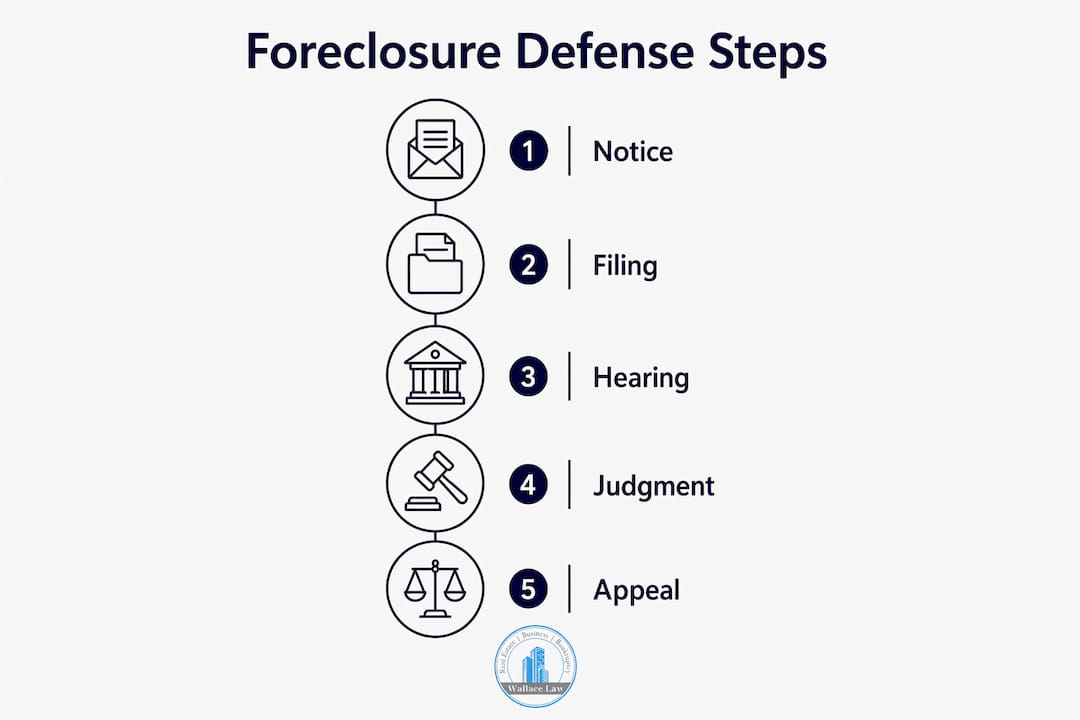
Judicial foreclosures require the lender to file a lawsuit and prove standing, valid acceleration of the loan, proper service, and compliance with the statute of limitations. Florida uses the judicial process, which means a court must approve every sale. Non-judicial foreclosures, used in states like California, move faster and give homeowners less time to respond. In California, the law mandates a 90-day Notice of Default and at least 21 days between the recording of a Notice of Trustee’s Sale and the auction date.
Key legal steps and defense windows
- Notice of Default issued. This starts the formal clock. Review it immediately for errors in the amount owed or the date of first default.
- Mandatory waiting period. Federal rules require 120 days from the first missed payment before filing. Any earlier filing is a procedural violation.
- Notice of Sale recorded. Once this is filed, the timeline accelerates sharply. Speed is critical at this stage. You must act within days, not weeks.
- File for injunctive relief. Courts treat home loss as irreparable harm. With proper evidence, a Temporary Restraining Order can halt the sale. Your attorney files this motion before the auction date.
- Challenge standing or procedural defects. In a judicial state like Florida, your attorney raises these defenses in the lender’s lawsuit. A successful challenge can result in dismissal.
Pre-foreclosure rights you should know
| Right | What it means |
|---|---|
| Reinstatement | Pay all past-due amounts to bring the loan current and stop foreclosure |
| Redemption | Pay the full loan balance to reclaim the property, even after a sale in some states |
| Loan modification review | Servicer must complete modification review before proceeding with foreclosure |
| Tender exception | Courts may waive the requirement to tender owed amounts if the loan itself was invalid |
Dismissals without prejudice reset the foreclosure process entirely. That reset buys you time to negotiate a modification, pursue other relief, or build a stronger defense.
Pro Tip: Keep every piece of mail related to your loan, including envelopes with postmarks. Original mailed notices with verified postmarks are powerful evidence when challenging whether proper notice was actually delivered.
What are the signs of a wrongful foreclosure?
Recognizing the warning signs early gives you the most options. Many homeowners miss these red flags because they assume the lender’s paperwork is correct.
- You are current on payments but receive a foreclosure notice anyway. This can result from servicer accounting errors or misapplied payments.
- You never received a Notice of Default. Proper delivery is a legal requirement. If you did not get it by certified mail or personal service, the notice may be defective.
- Foreclosure proceeds while your loan modification is pending. This is textbook dual tracking and is prohibited under federal servicing rules.
- The mortgage was recently sold or transferred. A new servicer taking over your loan increases the risk of chain of title defects and assignment errors.
- The amount claimed as owed does not match your records. Inflated fees, misapplied payments, or incorrect principal balances are all grounds for challenge.
- The sale date was set with little or no advance notice. Compressed timelines that violate required waiting periods are a procedural defect.
Understanding the Florida foreclosure process helps you spot where your lender may have deviated from the required steps.
What legal remedies do homeowners have to fight wrongful foreclosure?
Homeowners facing wrongful foreclosure have real legal tools available. The right remedy depends on where you are in the process and what violations occurred.
Before the sale: File for a Temporary Restraining Order or preliminary injunction to stop the auction. Courts recognize home loss as irreparable harm, which makes injunctive relief more accessible than in most civil cases. You can also stop foreclosure legally through loan reinstatement or a court-ordered mediation.
After the sale: You can still challenge a completed foreclosure. Courts can void a deed if the sale violated procedural requirements or if the foreclosing party lacked standing. This is harder to win but remains a viable path in cases with clear violations.
Money damages: Proven wrongful foreclosure remedies include compensation for lost equity, relocation costs, and emotional distress. In cases involving fraud or willful violations, courts may award additional damages.
Bankruptcy as a tool: Filing for bankruptcy triggers an automatic stay that immediately halts foreclosure proceedings. It is not a permanent solution, but it creates breathing room. Learn more about foreclosure defense bankruptcy options to understand when this approach makes sense.
Key documentation to gather right now:
- All foreclosure notices, including envelopes and postmarks
- Your original loan documents and promissory note
- All correspondence with your servicer, including emails and letters
- Records of every payment made, including bank statements
- Any loan modification application and the servicer’s responses
- Mortgage assignment documents filed in the public record
Pro Tip: Tax liens and levies can complicate foreclosure defenses by creating competing claims on your property. If you have unresolved IRS liens or levies, address them alongside your foreclosure defense to avoid losing equity to multiple creditors at once.
Early legal intervention consistently produces better outcomes than waiting. An attorney can identify defects in the lender’s case before the sale date, when your options are widest.
Key Takeaways
Wrongful foreclosure requires a lender to have violated legal, contractual, or procedural requirements, and homeowners who document violations early hold the strongest defense positions.
| Point | Details |
|---|---|
| Definition matters | Wrongful foreclosure is a legal violation, not just a disputed foreclosure. |
| Act before the sale | Filing for injunctive relief before the auction date is your most powerful option. |
| Document everything | Notices, postmarks, payment records, and modification correspondence are your core evidence. |
| Standing is challengeable | Lenders lacking a clean chain of title cannot legally foreclose on your home. |
| Remedies exist post-sale | Courts can void deeds and award damages even after a wrongful sale is completed. |
What I have learned from watching homeowners fight back
The homeowners who fare best in wrongful foreclosure cases share one trait: they treated the first foreclosure notice as a legal emergency, not a financial inconvenience. The ones who waited, hoping the servicer would fix an error or that a modification would come through, often ran out of time before they could act.
The most underused defense I see is the standing challenge. Lenders improved their documentation practices after 2008, but genuine gaps in chain of title and robo-signing errors still exist. Many homeowners and even some attorneys overlook this angle because it feels abstract. It is not. If the entity foreclosing on you cannot prove it owns your debt, the entire action is invalid.
The tender requirement trips people up too. Courts often require you to offer to pay what you owe before they will void a sale. But exceptions exist for invalid loans, cases where you were never actually in default, and situations involving unfair lending practices. Do not assume you must pay first to fight back.
My honest advice: gather your loan documents today, not after you receive a sale date. The foreclosure defense response window is shorter than most homeowners expect. An attorney reviewing your file before a crisis hits can spot defects that would otherwise go unnoticed until it is too late.
— Steven
Wallacelawflorida is ready to help you defend your home
Facing a foreclosure notice is stressful, but you do not have to face it without experienced legal support. Wallacelawflorida works directly with Florida homeowners on wrongful foreclosure defense, from reviewing procedural defects in your loan file to filing injunctions that stop sales before they happen.
The attorneys at Wallacelawflorida handle case evaluations, injunction filings, standing challenges, and damages claims for homeowners in Boynton Beach and surrounding areas. If you have received a foreclosure notice and suspect something is wrong, the time to act is now. Get residential property legal help from attorneys who know Florida foreclosure law and who will treat your case with the attention it deserves.
FAQ
What is wrongful foreclosure in simple terms?
Wrongful foreclosure is when a lender or servicer forecloses on a home while violating legal, contractual, or procedural requirements. It differs from a standard foreclosure because the lender broke the rules, not just the homeowner.
What are the most common signs of wrongful foreclosure?
The clearest signs include foreclosure proceeding during an active loan modification review, missing or improperly delivered notices, and a foreclosing entity that cannot prove it owns your debt.
How do I fight a wrongful foreclosure before the sale date?
File for a Temporary Restraining Order immediately after receiving a Notice of Sale. Courts treat home loss as irreparable harm and will often grant emergency relief when supported by evidence of procedural violations.
Can I challenge a foreclosure after the sale is completed?
Yes. Courts can void a completed sale if the foreclosing party lacked standing or violated required procedures. Homeowners can also seek money damages for lost equity, relocation costs, and emotional harm.
Does bankruptcy stop a wrongful foreclosure?
Filing for bankruptcy triggers an automatic stay that immediately halts any foreclosure sale. It is a temporary measure that creates time to negotiate or pursue other legal remedies, not a permanent resolution on its own.