

What is a real estate contract contingency?
A real estate contract contingency is a legally binding condition written into a purchase agreement that must be satisfied before the sale can close. If the condition is not met by a specified deadline, either party typically has the right to walk away from the deal without penalty. Think of it as a built-in exit ramp with a clear expiration date.
Under California Civil Code § 1436, a contingency in real estate is defined as a condition that, if not fulfilled, allows a party to rescind the contract. While that statute is California-specific, the same legal concept applies across U.S. real estate transactions.

Including contingencies in offers is a common practice among buyers, with 82% including at least one contingency in their final offer according to a 2024 Zillow report. That figure alone tells you how standard these clauses have become.
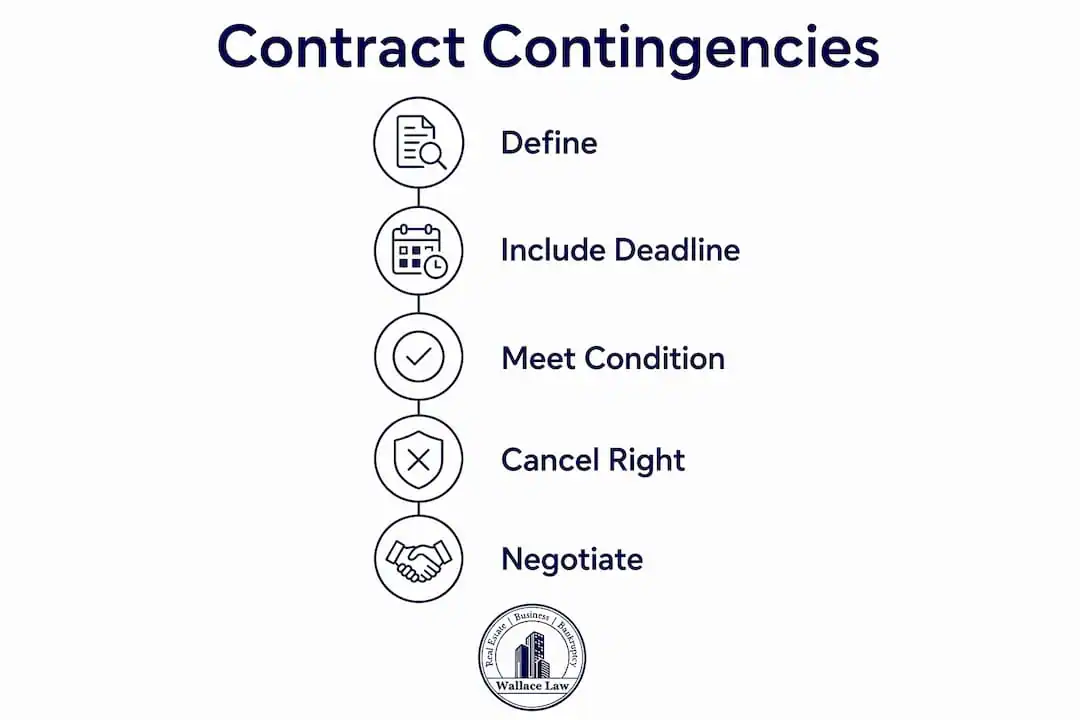
Every contingency clause typically contains three core elements:
- The condition itself: A specific event or outcome that must occur (e.g., satisfactory home inspection, mortgage approval)
- A deadline: The date by which the condition must be met or waived
- A cancellation right: The buyer’s or seller’s ability to terminate the contract if the condition fails
The National Association of REALTORS® consistently advises buyers and sellers to treat contingency language as seriously as any other contract term. Vague wording or missed deadlines can strip away protections you assumed were in place.
Table of Contents
- Common types of real estate contingencies you should know
- What happens when a contingency is not met
- Practical examples of how contingencies play out
- Expert insights on negotiating and managing contingencies
- Work with Wallacelawflorida on your real estate contract
- Key Takeaways
- FAQ
Common types of real estate contingencies you should know
Not all contingencies are created equal. Some protect buyers from financial exposure; others give sellers a measure of control. Here are the types you will encounter most often in U.S. purchase agreements.
-
Inspection contingency: Gives buyers a window, typically 7 to 10 days after acceptance, to hire a licensed inspector. If significant defects surface, the buyer can request repairs, negotiate a price reduction, or cancel the contract entirely.
-
Financing contingency: Protects buyers who need a mortgage. If the lender denies the loan by the contract deadline, usually 21 to 30 days post-acceptance, the buyer can exit without forfeiting their earnest money deposit.
-
Appraisal contingency: The lender orders an independent appraisal. If the property appraises below the agreed sale price, the buyer can renegotiate the price, make up the difference in cash, or back out penalty-free.
-
Title contingency: Requires a clean title search confirming the seller has the legal right to transfer ownership, free of liens, judgments, or competing claims.
-
Home sale contingency: Allows buyers to make an offer on a new property while their current home is still on the market. The purchase only proceeds if the existing home sells within a set timeframe.
-
Homeowners insurance contingency: Lets buyers confirm they can obtain affordable coverage before committing. In high-risk areas like coastal Florida, this one carries real weight.
-
HOA document review contingency: Gives buyers time to review homeowners association rules, financials, and restrictions before deciding whether to proceed.
-
Kick-out clause (seller protection): Allows the seller to continue marketing the property after accepting a contingent offer. If a better offer arrives, the original buyer typically gets a short window, often 24 to 72 hours, to remove their contingencies or lose the deal.
-
Rent-back clause: Lets the seller remain in the home for a defined period after closing, giving them time to find their next property without being forced out at the closing table.
What happens when a contingency is not met
When a contingency deadline passes without the condition being satisfied, the contract does not automatically collapse. What happens next depends on which party acts and how quickly.
-
Buyer’s right to cancel: If the buyer exercises a valid contingency before its deadline, they can terminate the contract and walk away without penalty. The key word is “before.” Acting after the deadline may void that protection entirely.
-
Earnest money recovery: Buyers who cancel under an active contingency, such as a failed inspection or denied mortgage, are generally entitled to a full return of their earnest money. Cancel outside those terms, and the deposit may be forfeited to the seller.
-
Seller’s options: Sellers are not passive in this scenario. A kick-out clause, as noted by the National Association of REALTORS®, lets them keep showing the property and accept a stronger offer, provided they give the original buyer proper notice.
-
Negotiation after failure: An unmet contingency does not always mean the deal is dead. Buyers and sellers often use the moment to renegotiate, whether that means a price reduction, a repair credit, or an extended deadline.
-
Risks of waiving contingencies: In competitive markets, buyers sometimes waive contingencies to make their offer more attractive. That strategy removes your legal safety net. If the deal goes sideways after you waive an inspection contingency, you own the problem.
-
Contract termination procedures: Most purchase agreements require written notice to terminate. Verbal cancellations rarely hold up. The notice must be delivered within the contingency window and to the correct party, usually through the agents or attorneys of record.
Practical examples of how contingencies play out
Real estate contracts can feel abstract until you see them in action. These scenarios show how contingency clauses actually function during a transaction.
-
Inspection contingency in action: A buyer goes under contract on a 1980s ranch home in Boynton Beach. During the 10-day inspection window, the inspector finds a failing HVAC system and evidence of prior roof leaks. The buyer submits a repair request. The seller agrees to replace the HVAC but declines the roof repair. The buyer accepts the credit and moves forward. Without the inspection contingency, that negotiation never happens.
-
Financing contingency triggers a cancellation: A buyer is pre-approved but loses their job two weeks into the contract period. The lender pulls the loan commitment. Because the financing contingency is still active, the buyer submits written notice of cancellation and recovers their full earnest money deposit.
-
Appraisal contingency leads to renegotiation: A home is under contract for $450,000. The appraisal comes in at $425,000. The lender will not finance above appraised value. The buyer invokes the appraisal contingency and requests a price reduction. The seller, motivated to close, agrees to $435,000. The buyer covers the remaining $10,000 gap.
-
Home sale contingency delays the process: A buyer makes an offer on a property contingent on selling their current condo. The seller accepts but includes a kick-out clause. Three weeks later, the seller receives a non-contingent offer. The original buyer gets 48 hours to remove their home sale contingency or step aside. They cannot sell their condo in time, so they exit the contract and recover their deposit.
-
Seller exercises the kick-out clause: A seller accepts an offer with multiple contingencies in a slow market. Two weeks later, a cash buyer submits a clean offer. The seller invokes the kick-out clause, notifies the original buyer, and gives them 72 hours to waive all contingencies. The original buyer cannot secure financing fast enough and withdraws.
-
HOA contingency changes the buyer’s mind: A buyer falls in love with a condo in a managed community. The HOA document review contingency gives them 10 days to examine the financials and rules. They discover the association has a pending special assessment of $8,000 per unit and a no-rental policy that conflicts with their investment plans. They cancel the contract within the window and receive their earnest money back.
Expert insights on negotiating and managing contingencies
Contingencies are not just protective clauses. In the hands of an experienced negotiator, they are leverage.

Precision in language is non-negotiable
A contingency clause must include a specific deadline, a clear condition, and an explicit cancellation right to be enforceable. The NAR Consumer Guide on contingencies is direct on this point: vague or expired contingencies can result in loss of protection or forfeiture of the earnest money deposit. “Reasonable time” is not a deadline. “Satisfactory inspection” without defined criteria invites disputes.
Hard vs. soft contingencies
Understanding the difference between hard and soft contingencies matters more than most buyers realize. A hard contingency requires the buyer to take affirmative action to remove it. A soft contingency expires automatically if the buyer does not act before the deadline. Miss a soft contingency deadline and you may be legally bound to proceed, even if the condition was never satisfied. This is one of the most common and costly mistakes buyers make.
Pro Tip: Before signing any purchase agreement, have a qualified real estate attorney review every contingency clause. Pay specific attention to the notification procedures. Many contracts require written notice delivered by a specific method, such as email to the listing agent or certified mail, and missing that procedural step can invalidate an otherwise valid cancellation.
Contingencies as negotiation tools
After an inspection reveals issues, buyers do not have to choose between accepting the property as-is or walking away. The contingency period is a structured negotiation window. Buyers can request repairs, a price reduction, or a closing credit. Sellers who want to close have every incentive to engage. The contingency gives the buyer standing to ask; without it, the seller has no obligation to respond.
When to consult a real estate attorney
The NAR guidance is clear: buyers and sellers should have all contract contingencies reviewed by a qualified real estate attorney. This is especially true in Florida, where local regulations and disclosure requirements add layers of complexity. Wallacelawflorida’s attorneys work with clients in Boynton Beach and surrounding areas to review purchase agreements, identify problematic contingency language, and protect clients’ interests before they sign anything. If you are navigating a transaction with multiple contingencies or a competitive market situation, knowing when to call a real estate attorney can be the difference between a clean close and a costly dispute.
For transactions involving divorce or property disputes where contingencies go unmet, the legal remedies and procedures can become significantly more complex. Attorneys at firms like J. Moore Legal handle exactly these intersections of family law and real estate contract termination.
Work with Wallacelawflorida on your real estate contract

Contingency clauses protect you, but only if they are drafted and managed correctly. Wallacelawflorida provides trusted legal guidance for real estate deals across Florida, from reviewing purchase agreements and contingency language to representing buyers and sellers through closing. Whether you are buying your first home in Boynton Beach or managing a commercial acquisition, the attorneys at Wallacelawflorida bring the local knowledge and personal attention that larger firms rarely offer. Contact Wallacelawflorida to schedule a consultation before you sign.
Key Takeaways
A real estate contract contingency is a legally binding condition that must be satisfied by a specific deadline, and missing that deadline can cost you your earnest money or your legal right to cancel.
| Point | Details |
|---|---|
| Contingencies are legally binding | Each clause must include a specific condition, a deadline, and a cancellation right to be enforceable. |
| — | Including contingencies in offers is a common practice: 82% of buyers included at least one contingency in their final offer, per the 2024 Zillow Consumer Housing Trends Report. |
| Earnest money depends on timing | Buyers who cancel under an active contingency recover their deposit; canceling outside that window risks forfeiture. |
| Hard vs. soft contingencies differ | Hard contingencies require active removal; soft contingencies expire automatically if the buyer misses the deadline. |
| Attorney review is strongly advised | The National Association of REALTORS® recommends having all contingency clauses reviewed by a qualified real estate attorney. |
FAQ
What is a normal contingency in a real estate contract?
The most common contingencies are inspection (typically 7–10 days), financing (21–30 days), and appraisal. About 82% of U.S. buyers include at least one contingency in their final offer, per the 2024 Zillow Consumer Housing Trends Report.
Can a seller reject a contingent offer?
Yes. Sellers can decline any offer, including contingent ones, and are not obligated to accept them. In competitive markets, sellers often favor non-contingent offers, though a kick-out clause can make a contingent offer more acceptable.
How long are homes usually contingent?
The contingency period varies by clause type. Inspection contingencies typically run 7–10 days; financing contingencies usually span 21–30 days. The full contract can remain contingent until all conditions are cleared, which often takes several weeks total.
Should I accept a contingent offer on my house?
It depends on your market and timeline. A contingent offer with a kick-out clause lets you keep marketing the property and accept a better offer if one arrives, which reduces your risk considerably. A real estate attorney can help you evaluate the specific terms before you decide.