

TL;DR:
- A bankruptcy estate is automatically created when you file, including all property interests you hold at that moment. The estate is managed by a court-appointed trustee who liquidates assets and distributes proceeds to creditors. Exclusions prevent certain assets from entering the estate, while exemptions protect assets already in it from liquidation.
A bankruptcy estate is defined as a distinct legal entity that forms automatically the moment you file for bankruptcy, capturing nearly all of your property interests under federal law. Understanding what is bankruptcy estate explained correctly is the first step toward protecting what matters most during financial recovery. Under Bankruptcy Code Section 541, this estate becomes the shared asset pool that a court-appointed trustee manages on behalf of your creditors. The estate’s scope is intentionally broad, which surprises most people facing bankruptcy for the first time. Knowing what enters the estate, what stays out, and how exemptions work gives you real control over the outcome.
What is a bankruptcy estate and how is it created?
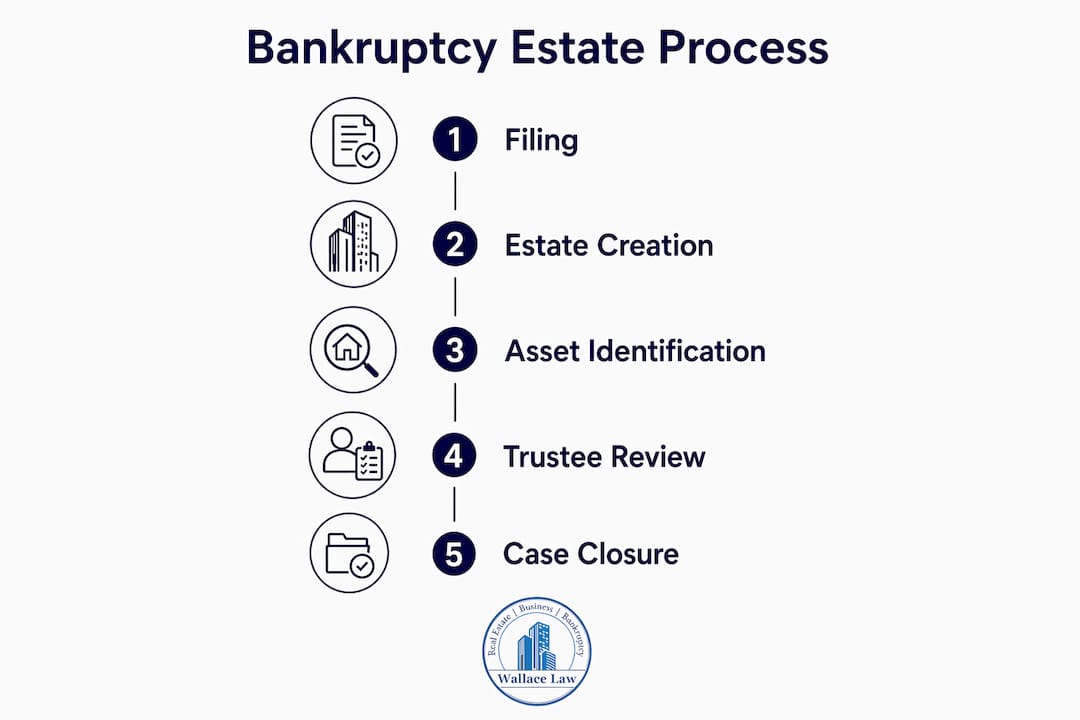
The bankruptcy estate is the formal legal collection of all property interests you hold at the exact moment you file your bankruptcy petition. It does not require a court order or any additional action on your part. Filing the petition creates it instantly and automatically under federal law. From that point forward, the estate is a separate legal entity, distinct from you as an individual, and it operates under the authority of the bankruptcy court.
Section 541(a) defines the estate broadly to maximize recovery for creditors. That breadth is intentional. Congress designed the bankruptcy estate to capture every legal or equitable interest you own, control, or have a right to receive at the filing date. This includes real property, personal property, financial accounts, business interests, and even pending lawsuits where you are the plaintiff.
The estate continues to exist until the court closes the case, discharges your debts, or formally abandons specific property back to you. Until one of those events occurs, the trustee holds authority over estate assets.
Which assets and interests comprise the bankruptcy estate?
The bankruptcy estate includes virtually every property interest you hold at the filing date, but the exact scope depends on which chapter you file under. The distinction between Chapter 7 and Chapter 13 is significant here.

Chapter 7 vs. Chapter 13 estate scope
In a Chapter 7 case, the estate freezes at the filing date. Property you acquire after that point generally stays yours. In a Chapter 13 case, Section 1306(a) expands the estate to include wages and other income you earn during the repayment plan period. That difference matters because Chapter 13 debtors commit future income to repay creditors over three to five years.
Common assets that enter the estate include:
- Real estate, including your primary home, rental properties, and vacant land
- Bank and investment accounts at the time of filing
- Vehicles, boats, and other titled personal property
- Business ownership interests and partnership shares
- Pending legal claims, such as personal injury lawsuits
- Inheritances, life insurance proceeds, and property settlements received within 180 days after filing
The 180-day rule catches many debtors off guard. Property acquired within 180 days of filing, such as an inheritance or life insurance payout, enters the estate even though you received it after the petition date. That timing rule exists to prevent debtors from filing strategically just before a windfall arrives.
The Supreme Court reinforced the estate’s broad reach in United States v. Whiting Pools, ruling that Section 541(a) captures property even when a creditor had already seized it before the filing date. That ruling means the estate can reclaim assets you no longer physically possess.
Pro Tip: List every asset you own, no matter how small, before filing. Omitting property from your bankruptcy schedules can result in the court denying your discharge entirely.
What role does the bankruptcy trustee play with the estate?
The bankruptcy trustee is appointed automatically when your case is filed. The trustee does not work for you or for any single creditor. Their job is to administer the estate fairly on behalf of all creditors.
The trustee’s core responsibilities include:
- Reviewing your financial disclosures and verifying the accuracy of your schedules
- Liquidating non-exempt assets and distributing proceeds to creditors in priority order
- Investigating recent financial transactions to identify transfers that may be reversed
- Using clawback powers under Section 549 to avoid unauthorized post-petition transfers made without court approval
- Filing a final accounting with the bankruptcy court once administration is complete
Trustees also hold the power to abandon property. If an asset would cost more to liquidate than it would generate for creditors, the trustee may abandon it back to you. This happens regularly with underwater real estate or property encumbered by large liens.
One of the most persistent fears debtors carry into bankruptcy is that a trustee will show up and take their furniture, clothing, or kitchen appliances. That fear is largely unfounded. Most consumer Chapter 7 cases result in the trustee filing a “no distribution” report, meaning no non-exempt assets worth liquidating were found. Trustees in consumer cases spend most of their time confirming that nothing needs to be seized, not actively stripping households of belongings.
Pro Tip: Respond to every trustee request promptly and completely. Delays or incomplete responses can extend your case and create unnecessary complications.
For a deeper look at trustee authority, Wallacelawflorida has published a detailed guide on the role of the bankruptcy trustee that covers powers and debtor obligations in plain language.
How do exclusions and exemptions affect your property in bankruptcy?
The terms “exclusion” and “exemption” sound similar but operate in completely different ways. Confusing them is one of the most costly mistakes a debtor can make.
Exclusions: property that never enters the estate
Excluded property never becomes part of the bankruptcy estate at all. Exclusions occur before estate formation, meaning the trustee has no authority over excluded assets. Common exclusions include certain retirement accounts protected under ERISA, education savings accounts meeting specific criteria, and some spendthrift trust interests. Because excluded property sits entirely outside the estate, you do not need to claim an exemption to protect it.
Exemptions: reclaiming property already in the estate
Exemptions work differently. Once property enters the estate, you can claim an exemption to reclaim your protected interest in it. The trustee can only liquidate the non-exempt portion of an asset. If the entire value falls within your exemption limit, the trustee returns the asset to you and moves on.
Debtors in most states choose between two systems:
- Federal exemptions under the Bankruptcy Code, which include protections for homestead equity, motor vehicles, household goods, tools of the trade, and retirement accounts
- State exemptions, which vary widely. Florida, for example, offers an unlimited homestead exemption for primary residences, making it one of the most debtor-friendly states in the country for homeowners
Some states require you to use state exemptions only. Others allow you to choose whichever system benefits you more. Wallacelawflorida’s guide on protecting assets with exemptions explains Florida’s specific options in detail.
The practical difference is significant. A debtor who misidentifies excluded property as merely exempt may fail to assert the correct legal argument, potentially losing an asset they were entitled to keep. Getting this distinction right early in the process protects your financial recovery.
If you own real estate and are weighing bankruptcy options, understanding how property is treated during the process is critical. Resources covering selling a house during bankruptcy offer useful context on how real estate fits into estate administration.
What practical implications does the bankruptcy estate have for debtors?
Understanding the bankruptcy estate definition changes how you approach the entire filing process. Several practical realities shape what you can protect and what you may lose.
- Timing your filing matters. If you expect an inheritance, a legal settlement, or a life insurance payout within the next six months, the 180-day rule means that windfall could enter your estate. Filing after receiving and spending those funds may produce a different outcome than filing before.
- Post-petition income is treated differently by chapter. In Chapter 7, wages you earn after filing belong to you, not the estate. In Chapter 13, your ongoing income funds the repayment plan and remains subject to estate rules for the duration of the case.
- Unscheduled property stays in the estate. A debtor’s unscheduled or unadministered property remains part of the bankruptcy estate until the court formally abandons or administers it. Forgetting to list an asset does not make it disappear from the estate.
- Trustees can reverse recent transfers. If you transferred property to a family member or paid off a preferred creditor shortly before filing, the trustee may use clawback powers to reverse those transactions and pull the value back into the estate.
- Legal counsel changes outcomes. An attorney who understands your state’s exemption system can structure your filing to maximize what you keep. Wallacelawflorida works with debtors in Boynton Beach and surrounding Florida communities to build filing strategies that protect the maximum amount of property under applicable law.
The components of bankruptcy estate law are not designed to punish debtors. They exist to create an orderly, fair process. Approaching bankruptcy as a structured legal procedure, rather than a crisis, produces better results.
Key Takeaways
The bankruptcy estate is a broad legal entity that captures nearly all debtor property at filing, and navigating it successfully requires understanding exclusions, exemptions, trustee powers, and chapter-specific rules.
| Point | Details |
|---|---|
| Estate forms automatically | Filing your petition instantly creates the bankruptcy estate under Section 541 with no additional action required. |
| Chapter matters for scope | Chapter 7 freezes the estate at filing; Chapter 13 includes post-petition wages throughout the repayment plan. |
| Exclusions vs. exemptions | Excluded property never enters the estate; exemptions reclaim protected portions of property already inside it. |
| Trustees rarely seize belongings | Most consumer Chapter 7 cases end with a no-distribution report, not household seizures. |
| The 180-day rule is critical | Inheritances and insurance proceeds received within 180 days of filing typically enter the estate. |
What I’ve learned from watching debtors misread the estate
Most debtors I’ve worked with arrive with the same two fears: that a trustee will take everything they own, and that filing bankruptcy means financial failure. Both fears are wrong, and both fears cost people money when they act on them.
The trustee is not your adversary. In a typical consumer Chapter 7 case, the trustee’s job is largely administrative. They verify your disclosures, confirm exemption claims, and close the case. The dramatic image of a trustee hauling away furniture exists almost entirely in myth.
The more dangerous mistake is confusing exclusions with exemptions. Debtors who assume their retirement account is “just exempt” sometimes fail to assert the stronger argument that it was never part of the estate at all. That distinction can mean the difference between a clean outcome and a contested hearing.
My consistent advice is this: do not wait until the filing date to understand your estate. Map your assets, identify what is excluded, claim every exemption you qualify for, and communicate openly with your attorney. Bankruptcy is a legal tool built to give people a real second chance. The estate process, properly understood, is the mechanism that makes that second chance possible.
— Steven
How Wallacelawflorida can help you manage your bankruptcy estate
Facing bankruptcy is difficult enough without trying to decode federal statutes on your own. Wallacelawflorida provides experienced bankruptcy legal guidance for individuals and families throughout Boynton Beach and South Florida, with a focus on asset protection, exemption planning, and trustee communication.

The firm offers a free Florida bankruptcy eBook that walks through estate concepts, exemption options, and chapter differences in plain language. For debtors who want personalized guidance, Wallacelawflorida’s attorneys review your specific asset picture and build a filing strategy designed to protect the maximum amount of property the law allows. Reach out to schedule a consultation and get clarity on where you stand.
FAQ
What is a bankruptcy estate in simple terms?
A bankruptcy estate is the legal collection of all property interests you own at the moment you file for bankruptcy. It becomes a separate legal entity managed by a court-appointed trustee on behalf of your creditors.
Does the bankruptcy estate include property I acquire after filing?
In Chapter 7, property acquired after filing generally stays yours, with the key exception of inheritances, life insurance, and property settlements received within 180 days of the filing date. In Chapter 13, post-petition income is included in the estate throughout the repayment plan.
What is the difference between excluded and exempt property?
Excluded property never enters the bankruptcy estate at all, so the trustee has no authority over it. Exempt property enters the estate but can be reclaimed through a legal exemption claim, protecting it from liquidation up to the applicable dollar limit.
Will the trustee take my personal belongings?
Most consumer Chapter 7 cases result in a no-distribution report, meaning the trustee finds no non-exempt assets worth liquidating. Trustees in consumer cases rarely seize household goods, clothing, or everyday personal items.
How does the bankruptcy estate process end?
The estate closes when the trustee completes administration, the court grants your discharge, or the court formally abandons remaining property back to you. Unscheduled or unadministered property remains part of the estate until one of those events occurs.