

An assignment of contract in real estate is the legal transfer of a buyer’s rights and obligations under a purchase agreement to a new buyer before closing. The original buyer, called the assignor, hands off the contract to a new party, the assignee, who then steps into the assignor’s position and completes the purchase under the original terms. This process is the foundation of real estate wholesaling in the United States, allowing investors to profit from real estate without ever taking title to a property.
Key elements of a real estate assignment:
- Assignor: The original buyer who holds the purchase contract and transfers their rights
- Assignee: The new buyer who receives those rights and assumes all obligations to close
- Seller: The property owner, who remains bound by the original contract terms
- Assignment fee: Compensation paid to the assignor, typically calculated as the difference between the original contract price and the amount the assignee pays
What is assignment of contract in real estate used for?
Assignment contracts appear most often in real estate investing, particularly wholesaling. A wholesaler secures a property under contract at a below-market price, then assigns that contract to a cash buyer or investor for a higher price, collecting the difference as profit without ever purchasing the property outright.
Common reasons investors and buyers use assignment contracts:
- Wholesaling: Locking up a distressed property and flipping the contract to an end buyer
- Avoiding capital requirements: No need to fund a full purchase or carry a mortgage
- Speed: A single closing completes the transaction, rather than two sequential deals
- Flexibility: Investors can control multiple properties without committing capital to each one
- Market opportunities: Rising markets create price gaps that make assignment fees attractive
What goes into an assignment contract?
A properly drafted assignment contract covers more than just the parties’ names. Every element needs to be spelled out clearly to avoid disputes at closing. Written documentation specifying all terms is required for the agreement to be enforceable.
Core components of a real estate assignment contract:
- Party identification: Full legal names of the assignor, assignee, and seller
- Original contract description: A clear reference to the underlying purchase agreement, often attached as an exhibit
- Assignment fee: The exact dollar amount the assignee pays the assignor, stated plainly
- Assumption of obligations: Confirmation that the assignee assumes all obligations under the original contract, including the closing date and purchase price
- Seller consent provision: Whether the original contract requires the seller’s written approval before the assignment is valid
- Earnest money terms: How earnest money is handled if either party fails to perform
Who pays the assignment fee, and how is it calculated?
The assignment fee is the assignor’s profit for finding the deal and transferring the contract. The assignee pays this fee at closing, and it is disclosed on the closing statement prepared by the title company or escrow officer.
The calculation is straightforward. If an assignor contracts a property for $150,000 and assigns it to an end buyer for $170,000, the assignment fee is $20,000. That gap between the two prices is what the assignor earns. Fees vary widely depending on the market, the deal, and the assignor’s negotiating position.
Key points on assignment fee mechanics:
- The fee must be disclosed to all parties
- Payment occurs at closing, not before
- The fee can be structured as a fixed dollar amount or as the price difference between contracts
- Both parties must agree on the amount in writing before the assignment is executed
What are the risks of an assignment contract?
Assignment contracts carry real legal and financial exposure for both sides. Understanding those risks before signing protects everyone involved.
- Anti-assignment clauses: Some purchase contracts prohibit assignments entirely or require the seller’s written consent. Violating this clause can void the assignment or trigger a breach of contract claim.
- Assignor liability: Unless the contract or a separate release agreement explicitly frees the assignor, they may remain liable if the assignee fails to close.
- Earnest money forfeiture: If the assignee backs out without a valid reason, the earnest money can be forfeited.
- Assignee performance risk: The assignor has no control over the assignee’s ability to close once the contract is transferred.
- Title company limitations: Some title companies in certain states decline to handle assignment-based wholesale transactions, which can delay or derail a closing.
Pro Tip: Before signing any assignment agreement, have a real estate attorney review the original purchase contract for anti-assignment language. Missing that clause is one of the most common and costly mistakes in wholesaling.
Assignment vs. novation: what is the legal difference?
Assignment and novation are often confused, but they produce very different legal outcomes. Assignment transfers rights from one party to another while the original contract remains in place. Novation replaces one party entirely, substituting a new party into the contract and releasing the original party from all future obligations.
Key distinctions:
- Assignment: Assignor may remain liable if the assignee fails to perform, unless a release is granted
- Novation: Original party is fully released; the new party takes on all rights and duties going forward
- Consent: Novation always requires the consent of all parties; assignment may not, depending on the contract
- Use case: Assignment works for transferring benefits; novation is the right tool when a party wants to exit the contract completely
For Florida real estate transactions, the FR/Bar residential contracts address assignability in paragraph 7, where parties check a box indicating whether the buyer can assign the contract and whether the original buyer is released from liability upon assignment.
How does assignment affect the original contract terms?

The assignee steps completely into the assignor’s shoes. Every term of the original purchase agreement, including the purchase price, closing date, contingencies, and conditions, carries over unchanged. The assignee cannot renegotiate those terms with the seller simply because the contract changed hands. If the closing date in the original contract is 30 days out, that deadline binds the assignee just as it bound the assignor.
One practical implication: if the assignee needs more time to close than the original contract allows, an amendment to the original purchase agreement may be required, which means getting the seller’s cooperation. That is not always guaranteed, especially if the seller was unaware an assignment was planned.
Common clauses and contingencies in assignment contracts
Beyond the core elements, assignment contracts typically include several protective clauses. A seller consent condition makes the assignment contingent on the seller’s written approval when the original contract requires it. A due diligence contingency gives the assignee a window to inspect the property and review documents before the assignment becomes binding. An earnest money clause specifies exactly what happens to deposited funds if either party cancels. Some contracts also include a representations clause, where the assignor warrants that the original contract is valid, in force, and freely assignable.
For Florida property transfers, understanding how deed and title mechanics interact with assignment agreements can prevent surprises at closing.
Real-world scenarios where assignment contracts are used
Wholesaling a distressed property: A wholesaler finds a vacant, run-down house and contracts it for $90,000. After marketing the deal to investors, they assign the contract to a house flipper for $105,000, collecting a $15,000 assignment fee at closing without ever owning the property.

Investor exit before closing: A buyer contracts a rental property but loses financing before closing. Rather than forfeit their earnest money, they assign the contract to another investor who can close with cash, paying a small assignment fee to make the deal work.
Pre-construction condo flips: In hot markets, buyers contract new construction units and later assign those contracts to other buyers at a higher price before the building is completed, capturing appreciation without taking title.
Key Takeaways
An assignment of contract transfers a buyer’s rights and obligations to a new buyer before closing, with the assignee stepping fully into the assignor’s position under the original contract terms.
| Point | Details |
|---|---|
| Core definition | The assignor transfers purchase contract rights to the assignee, who closes the deal under original terms. |
| Assignment fee | Calculated as the difference between the original contract price and the assignee’s purchase price, paid at closing. |
| Assignor liability | The assignor may remain liable after assignment unless the contract or a separate release explicitly frees them. |
| Anti-assignment clauses | Some contracts prohibit assignment or require seller consent; violating this can void the transfer. |
| Assignment vs. novation | Assignment transfers rights only; novation replaces a party entirely and releases the original party from obligations. |
FAQ
What does assignment of contract mean when buying a house?
It means the original buyer transfers their right to purchase the property to a new buyer before closing. The new buyer takes over all obligations under the original purchase agreement, including the price and closing date.
What happens during the assignment of a contract?
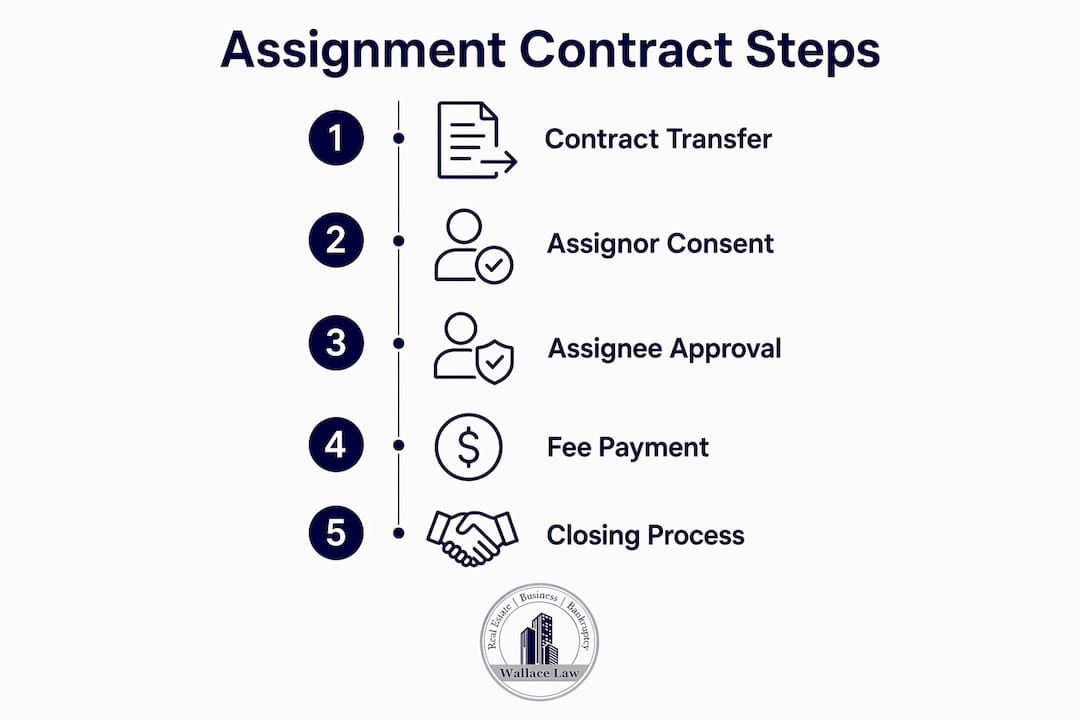
The assignor and assignee sign an assignment agreement, the assignee pays an assignment fee, and the assignee then closes directly with the seller under the original contract terms. There is only one closing.
Who pays the assignment fee?
The assignee pays the assignment fee to the assignor, typically at closing through the title company’s closing statement. The fee represents the assignor’s profit for finding and securing the deal.
What are the risks of assignment?
The main risks include anti-assignment clauses that can void the transfer, the assignor remaining liable if the assignee fails to perform, and potential forfeiture of earnest money if either party defaults.
Real estate assignments can be a powerful tool, but the legal details matter. If you are buying, selling, or investing in Florida and need clarity on how a contract assignment affects your position, the attorneys at Wallacelawflorida work through these transactions regularly and can help you move forward with confidence.