

TL;DR:
- Title defects and broken chains of ownership can invalidate a lender’s standing to foreclose in Florida. Filing a timely Answer and asserting defenses based on title issues is essential, as missing deadlines often leads to automatic default judgments. A quiet title lawsuit can permanently resolve ownership disputes when title chain problems are severe.
Legal title in real estate is defined as the documented right to own and control a property, and the role of title in foreclosure defense is to determine whether the party suing you actually has the legal authority to take your home. Florida uses a judicial foreclosure process, which means a lender must file a lawsuit and prove its case in court. That requirement gives you real opportunities to fight back. Title defects, broken chains of ownership, and improper assignments are not technicalities. They are legitimate legal grounds that Florida courts take seriously.
How does the chain of title affect foreclosure defense?
The chain of title is the complete, unbroken sequence of ownership transfers recorded for a property from its original grant to the present day. When that chain has a gap or an error, it creates a serious problem for the foreclosing party. Florida courts require the plaintiff to prove it holds the right to foreclose, and a broken chain of title directly attacks that proof.

The most common source of chain of title problems is the Mortgage Electronic Registration Systems, known as MERS. MERS frequently appears as the mortgagee on loan documents without actually owning the promissory note. Courts have found that this separation between the mortgage holder and the note holder creates a “fatal disconnect” that undermines a lender’s standing to foreclose. Standing means the legal right to bring a lawsuit, and without it, the case cannot proceed.
Improper assignments compound the problem. When a mortgage is sold or transferred, the assignment must be properly executed and recorded. If an assignment is missing, signed by an unauthorized party, or recorded after the foreclosure complaint was filed, it weakens the lender’s position significantly.
Common chain of title problems to look for include:
- Gaps in recorded assignments between lenders or servicers
- Assignments executed after the foreclosure complaint was filed
- MERS listed as mortgagee without a valid transfer of the promissory note
- Endorsements on the note that are blank, missing, or out of sequence
- Transfers made by entities that had already dissolved or merged
Pro Tip: Request a full copy of your loan’s payment history, the original promissory note, and every recorded assignment from your county’s property records. Comparing these documents side by side often reveals the exact break in the chain.
What are common title defects used to challenge a foreclosure?
A title defect is any flaw in the ownership record that calls into question who legally holds an interest in the property. In foreclosure cases, these defects become affirmative defenses, meaning you assert them in your legal response to attack the lender’s right to foreclose.
Robo-signing refers to the practice of bank employees signing thousands of mortgage documents without reading them, a widespread problem during the foreclosure crisis of the late 2000s. Courts now scrutinize assignments and affidavits carefully to verify their authenticity. A document signed by someone without proper authority is legally defective, and that defect can invalidate the lender’s standing.
Lost Note Affidavits are another frequent battleground. When a lender cannot produce the original promissory note, it may file a Lost Note Affidavit to substitute for the missing document. However, Lost Note Affidavits must meet strict statutory requirements to be valid. Many are successfully challenged, resulting in foreclosure delays or outright dismissals.
The table below summarizes common title defects and their impact on foreclosure proceedings.
| Title defect | Foreclosure impact |
|---|---|
| Broken assignment chain | Lender cannot prove ownership of the note or mortgage |
| MERS as mortgagee without note | Creates standing challenge; lender may lack authority to sue |
| Robo-signed documents | Assignments or affidavits may be declared legally void |
| Defective Lost Note Affidavit | Lender’s authority to foreclose is undermined or eliminated |
| Post-filing assignment | Assignment recorded after suit filed may not establish standing |
Title insurance and foreclosure intersect here in an important way. If you purchased an owner’s title insurance policy, your insurer may have an obligation to defend you against claims that arise from pre-existing title defects. Reviewing your policy with a title insurance attorney can reveal coverage you did not know you had.
How does filing a quiet title action serve as a foreclosure defense?
A quiet title action is a lawsuit asking a court to officially declare who holds valid legal title to a property. It cuts through competing claims and produces a court order that settles ownership once and for all. In foreclosure defense, a quiet title action can halt foreclosure proceedings when the foreclosing party’s ownership interest is genuinely in dispute.
Quiet title actions are most appropriate in specific situations. You might file one when the chain of title is so severely broken that the lender cannot credibly claim ownership of the note or mortgage. They also apply when a prior foreclosure was improperly handled, leaving a cloud on the title, or when multiple parties claim an interest in the same property.
The legal effect is significant. A court ruling in your favor on a quiet title action can defeat the foreclosing party’s claim entirely if the court finds it holds no valid interest. That outcome is more permanent than a dismissal based on procedural standing, which a lender can often cure by obtaining proper documentation.
The practical steps for Florida homeowners considering this defense are:
- Obtain a full title search from a licensed title company or attorney to identify all recorded interests and defects.
- Consult a Florida real estate attorney to evaluate whether the defects are strong enough to support a quiet title claim.
- File the quiet title complaint in the circuit court for the county where the property is located.
- Serve all parties with a recorded interest, including the lender, any junior lienholders, and MERS if listed.
- Present evidence at the hearing showing why the opposing party’s claimed interest is invalid.
One critical distinction: a quiet title action is a separate lawsuit, not just a defense raised inside the foreclosure case. You can pursue both simultaneously, but each requires its own legal strategy. An attorney familiar with Florida foreclosure defense options can advise you on which path fits your specific facts.
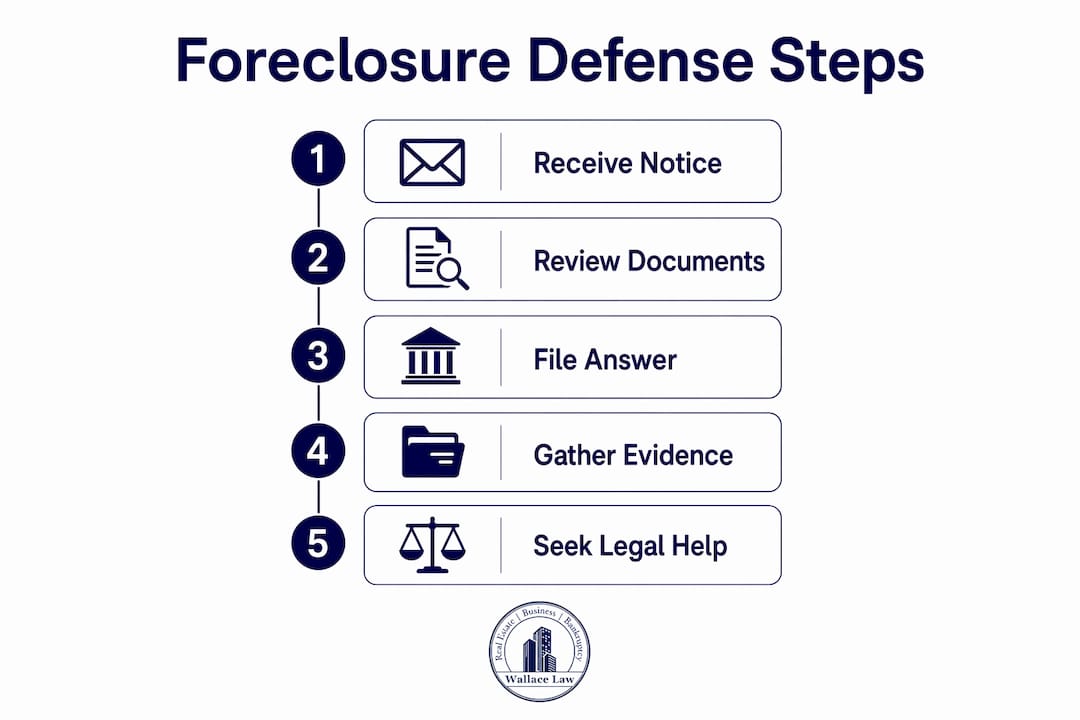
What procedural steps should Florida homeowners take to use title issues in foreclosure defense?
Timing controls everything in Florida foreclosure defense. Florida homeowners have 20 to 30 days after receiving a foreclosure complaint to file a formal Answer with the court. Missing that window often results in a default judgment, which allows the foreclosure to proceed without any opposition from you.
Your Answer is the document where you assert affirmative defenses. Raising affirmative defenses such as lack of standing, improper assignment, or defective note endorsement in the Answer is legally required to preserve those arguments. Fail to raise them at this stage and you forfeit the right to use them later in the case. Florida courts do not allow homeowners to introduce new defenses at trial that were not pleaded in the Answer.
Once defenses are properly raised, the lender must respond to them. If the lender files a motion for summary judgment, it must show the court that no genuine dispute of material fact exists. A well-documented title defect creates exactly that dispute, forcing the lender to produce clean evidence of its ownership chain before the court will grant summary judgment.
Key steps for building a title-based defense include:
- File your Answer before the deadline, even if it is a basic response, to preserve your right to defend
- Include specific affirmative defenses naming the exact title defects you have identified
- Gather all recorded documents from the county property appraiser and clerk of courts
- Obtain the original promissory note and compare endorsements to the recorded assignment chain
- Work with a real estate attorney to evaluate each defect’s legal strength before the hearing
Pro Tip: Florida’s public records system lets you search recorded documents online through your county clerk’s website. Pull every assignment, satisfaction, and modification recorded against your property. Lenders sometimes record corrective assignments during litigation, and catching those in real time strengthens your defense.
One realistic note: dismissals for lack of standing are typically without prejudice. That means the lender can refile once it obtains proper documentation. The debt does not disappear. Title defenses buy time, create leverage for negotiation, and sometimes produce permanent dismissals, but they work best as part of a broader legal strategy rather than a single silver bullet.
For guidance on the full response process, the foreclosure defense response guide from Wallacelawflorida covers filing deadlines and defensive strategies in detail.
Key takeaways
Title defects in Florida foreclosure cases give homeowners the legal standing to challenge whether the foreclosing party has the right to sue at all.
| Point | Details |
|---|---|
| Chain of title matters | A broken or defective chain of title directly undermines the lender’s standing to foreclose. |
| MERS creates vulnerabilities | MERS listed as mortgagee without holding the note creates a “fatal disconnect” courts recognize as a defense. |
| File your Answer on time | Florida homeowners have 20–30 days to respond; missing this deadline forfeits all title defenses. |
| Quiet title is a separate action | A quiet title lawsuit can permanently defeat a lender’s claim, not just delay it. |
| Dismissals are often without prejudice | Standing-based dismissals let lenders refile; use title defenses as leverage, not a final solution alone. |
What I’ve learned from title-based foreclosure defenses in Florida
After working through Florida foreclosure cases involving title disputes, the pattern I see most often is this: homeowners assume the lender’s paperwork is correct because it came from a bank. That assumption is wrong more often than most people realize.
The MERS system, in particular, created a generation of mortgage documents where the entity named on the mortgage and the entity holding the note are different parties. Courts have consistently held that ownership separation between mortgage and note-holding entities creates real defense opportunities. The homeowners who benefit from this are the ones who actually pull the documents and look.
The misconception I push back on hardest is the idea that title defenses are just delay tactics with no real value. That is sometimes true, but not always. A defective Lost Note Affidavit that fails statutory requirements can result in a dismissal that forces the lender to start over. A quiet title action based on a genuinely broken chain can produce a court order that extinguishes the lender’s claim entirely. These are not minor procedural wins.
My honest advice: do not try to evaluate your own title chain without legal help. The documents are public, but interpreting what a gap in the assignment chain legally means requires experience with Florida real estate law. Homeowners who go it alone often miss the strongest defenses or raise them incorrectly, which is worse than not raising them at all. Get a qualified attorney involved before the Answer deadline, not after.
— Steven
How Wallacelawflorida helps Florida homeowners with title-based foreclosure defense
Wallacelawflorida focuses on real estate and foreclosure defense for homeowners in Boynton Beach and the surrounding South Florida area. The firm’s attorneys examine title chains, identify defects in assignments and note endorsements, and build defenses tailored to the specific facts of each case.

Whether you need help filing a timely Answer, asserting affirmative defenses, or pursuing a quiet title action, Wallacelawflorida provides the personal attention that larger firms rarely offer. The attorneys understand Florida’s judicial foreclosure system and know how to use title issues to create real leverage. For homeowners ready to take their situation seriously, the real estate legal services page outlines how the firm can help. You can also learn more about residential property legal help for Florida homeowners facing foreclosure.
FAQ
What is the role of title in foreclosure defense?
Title in foreclosure defense establishes whether the foreclosing party legally owns the right to sue. A defective or broken chain of title can strip the lender of standing and stop the foreclosure.
Can a title defect actually stop a foreclosure in Florida?
Yes. Florida courts require lenders to prove ownership of the note and mortgage. A documented title defect, such as an improper assignment or defective Lost Note Affidavit, can result in dismissal of the foreclosure case.
What is a quiet title action and when should I use it?
A quiet title action is a lawsuit asking a court to declare who holds valid legal title to a property. Use it when the lender’s ownership interest is genuinely disputed and the chain of title is too broken to support their foreclosure claim.
How does MERS affect my foreclosure defense?
MERS is often listed as the mortgagee without holding the promissory note, creating a separation that courts recognize as a standing problem. That disconnect can be raised as an affirmative defense in your Answer to challenge the lender’s right to foreclose.
What happens if I miss the deadline to file my Answer in Florida?
Missing the 20–30 day deadline to file an Answer typically results in a default judgment, allowing the foreclosure to proceed without opposition. All title-based defenses are forfeited if you do not respond in time.