

TL;DR:
- An attorney’s role in a business sale involves managing legal documents from the letter of intent to post-closing obligations. Engaging an experienced M&A attorney early helps with risk negotiation, legal compliance, and strategic planning to maximize the seller’s protections. Their expertise ensures the deal closes smoothly while minimizing post-closing liabilities and surprises.
The role of attorney in a business sale is to act as transaction counsel who drafts, negotiates, and manages every legal document from the letter of intent through closing and beyond. Without skilled legal representation, sellers expose themselves to post-closing liabilities that can erase years of business value. This guide explains exactly what a business transaction attorney does, when to hire one, and why the difference between a general business lawyer and a specialized M&A attorney matters more than most sellers realize.
What are the core responsibilities of an attorney in a business sale?
An attorney’s work begins at the letter of intent stage and runs through closing, with a post-closing tail covering indemnity claims and escrow administration. That scope is broader than most sellers expect when they first sit down with counsel.
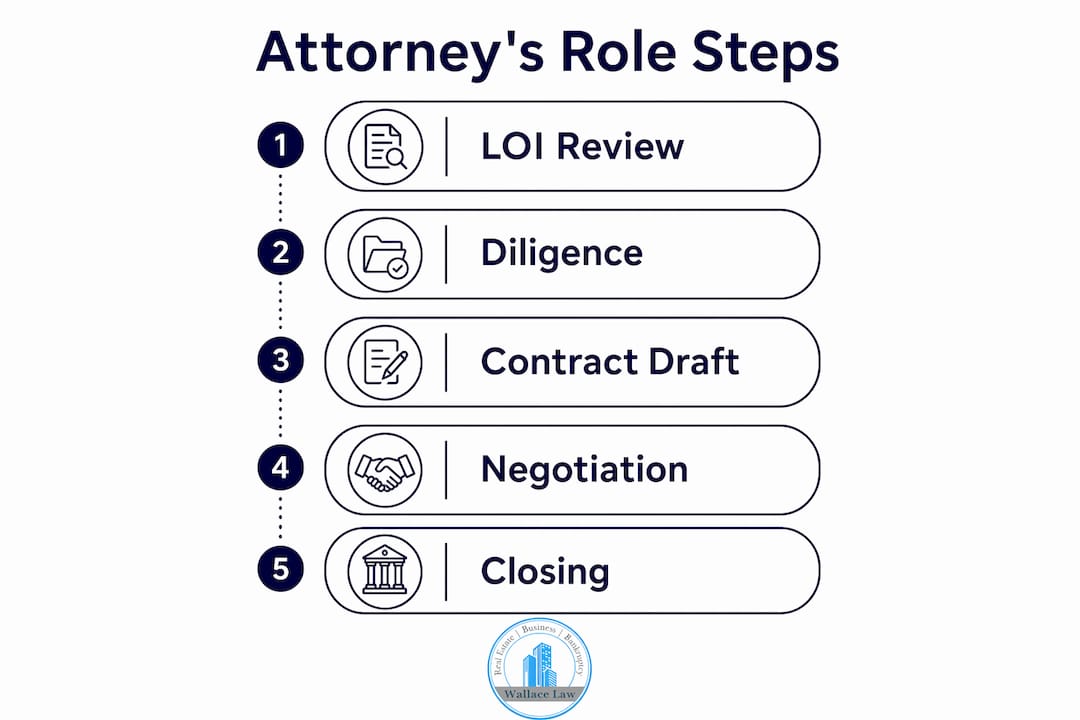
The primary responsibilities break down into four sequential phases:
- Letter of intent review. The attorney reviews and negotiates the LOI before the seller signs anything. This document sets the framework for the entire deal, including exclusivity periods and price adjustment mechanisms.
- Purchase agreement drafting and negotiation. The attorney drafts or redlines the purchase agreement, which governs representations and warranties, indemnification, closing conditions, and post-closing obligations.
- Legal due diligence coordination. The attorney manages the seller’s disclosure process, reviews the buyer’s diligence requests, and addresses any legal issues uncovered. Diligence findings must translate directly into allocation clauses in the purchase agreement. Isolated diligence that never reaches the deal documents is one of the most common failure modes in business sales.
- Closing and post-closing administration. The attorney manages the closing checklist, coordinates signatures, and oversees escrow and indemnification obligations after the deal closes.
Most deals take 90–120 days from LOI to closing. That timeline means the attorney is actively working on your transaction for three to four months, not just showing up at the closing table.
Pro Tip: Ask any prospective attorney how many business sale transactions they closed in the past 12 months. A general business lawyer who handles one or two sales per year operates at a different level than a specialist who closes 20.

How does an attorney protect the seller’s legal interests?
Seller protection in a business sale comes almost entirely from how well the attorney negotiates the risk-allocation terms in the purchase agreement. Those terms include representations and warranties, indemnification obligations, escrow holdbacks, and closing conditions.
Here is what each of those protections actually does for you as a seller:
- Representations and warranties. These are factual statements you make about the business. A skilled attorney narrows their scope, limits survival periods, and builds out disclosure schedules that reduce your exposure. Survival periods typically run 12–24 months post-closing, and liability caps are often set at 10–15% of the purchase price.
- Indemnification. This clause defines what you owe the buyer if a representation turns out to be false. Your attorney negotiates baskets (minimum thresholds before claims trigger) and caps (maximum amounts you can owe) to keep your exposure manageable.
- Escrow holdbacks. Buyers routinely request that a portion of the purchase price sit in escrow for 12–18 months as security for indemnification claims. Your attorney negotiates the amount, the release schedule, and the conditions under which funds are returned to you.
- Closing conditions. These are the hurdles both parties must clear before the deal closes. Poorly drafted conditions can give a buyer an easy exit. Your attorney tightens these to protect the deal you negotiated.
Sellers who treat reps and warranties as boilerplate routinely discover post-closing that they owe money back to the buyer. That outcome is almost always preventable with active negotiation.
Pro Tip: Request a plain-language summary of every representation you are making before you sign. Your attorney should be able to explain each one in two sentences. If they cannot, the disclosure schedule needs more work.
Why should you engage an attorney early in the sale process?
Early legal involvement is the single most underused advantage available to business sellers. Most owners wait until a buyer appears before calling an attorney. That delay costs them in three specific ways.
First, tax planning opportunities close. The structure of a sale, whether it is an asset sale or a stock sale, has major tax consequences for the seller. An attorney working alongside a CPA before the deal launches can identify structures that reduce your tax burden. Once a buyer is at the table with a signed LOI, restructuring the deal becomes far harder.
Second, legal housekeeping gets rushed. Early engagement of counsel helps address management incentive arrangements, outstanding contract assignments, and corporate record cleanup before a buyer’s diligence team finds problems. Buyers use diligence findings as leverage to renegotiate price. Fixing issues before the process starts removes that leverage.
Third, sellers enter negotiations unprepared. An attorney who has been involved from the start can brief you on what buyers typically ask for, which requests are standard, and which are aggressive. That preparation changes how you respond at the table.
“The sellers who get the best outcomes are the ones who treat legal counsel as a pre-sale advisor, not a closing-day resource. By the time most sellers call an attorney, the decisions that matter most have already been made.”
Engaging a business sale attorney six to twelve months before you plan to go to market gives you time to act on that advice rather than simply receive it.
What regulatory and compliance roles does an attorney handle?
Regulatory compliance is the part of a business sale that most sellers never think about until it stops the deal. An attorney manages this layer of the transaction from start to finish.
The most significant federal compliance requirement for larger transactions is the Hart-Scott-Rodino Act, commonly called HSR. The table below summarizes the key elements attorneys manage:
| Compliance Task | Attorney’s Role | Timing |
|---|---|---|
| HSR filing threshold review | Determines whether the deal size triggers a mandatory filing | Pre-LOI or early deal stage |
| HSR notification preparation | Prepares complete, compliant filing documents and checklists | Before signing definitive agreement |
| Waiting period management | Monitors the 30-day waiting period and coordinates with regulators | Post-filing |
| State regulatory filings | Handles any state-level business transfer or license notifications | Concurrent with federal process |
| Closing clearance confirmation | Confirms all regulatory approvals are in place before closing occurs | Final pre-closing step |
Incomplete or late HSR filings can delay a closing by weeks and expose both parties to civil penalties. Preparing complete HSR filings early prevents administrative delays. Attorneys build detailed document checklists for these filings precisely because the cost of getting them wrong is high.
For most small to mid-size business sales in Florida, HSR thresholds may not apply. But state-level license transfers, UCC lien releases, and contract assignment consents still require careful legal coordination. An attorney builds a closing checklist that tracks every one of these items and confirms completion before the closing date. Understanding US business compliance requirements at both the federal and state level is part of what makes specialized transaction counsel worth the investment.
Key takeaways
An attorney’s value in a business sale is concentrated in risk negotiation and transaction management, not in finding buyers or setting price.
| Point | Details |
|---|---|
| Attorney scope runs LOI to post-closing | Legal counsel manages documents, diligence, and escrow from letter of intent through indemnity tail. |
| Reps and warranties demand active negotiation | Survival periods of 12–24 months and liability caps of 10–15% of purchase price define your post-close exposure. |
| Early engagement prevents costly surprises | Involving counsel before a buyer appears allows tax planning, legal cleanup, and negotiation preparation. |
| Diligence findings must reach the deal documents | Isolated diligence that never translates into purchase agreement protections leaves sellers exposed. |
| Regulatory compliance can stop a closing | HSR filings, lien releases, and contract assignments require attorney-managed checklists to close on time. |
What i have learned about m&a counsel after years of business transactions
Most sellers assume any business attorney can handle a sale. That assumption is wrong, and it costs people real money.
Transaction counsel are specialized M&A attorneys who focus on the legal mechanics of buying and selling companies. A general business lawyer who drafts employment agreements and handles contract disputes operates in a completely different discipline. The purchase agreement in a business sale is one of the most technically dense documents in commercial law. Negotiating it well requires pattern recognition that only comes from doing it repeatedly.
The other thing I have seen consistently is that attorney leverage is in risk allocation, not in deal sourcing. Your broker finds the buyer. Your attorney determines how much of the purchase price you actually keep after closing. Those are not the same job, and conflating them leads sellers to underinvest in legal counsel at exactly the moment it matters most.
The sellers who get hurt are the ones who engage counsel late, choose the cheapest option, or treat the legal process as a formality. The purchase agreement is not a formality. It is the document that governs every dispute you will ever have with that buyer. Get it right the first time.
— Steven
How Wallacelawflorida supports business owners through the sale process
Selling a business in Florida involves layers of legal complexity that general practitioners are not equipped to handle alone. Wallacelawflorida provides focused business transaction legal support for owners in Boynton Beach, Fort Lauderdale, and surrounding South Florida communities. The firm’s attorneys work directly with sellers on purchase agreement negotiation, due diligence coordination, and closing management, with the kind of personal attention that larger firms rarely offer.

If you are planning a business sale in the next 6–12 months, the right time to consult with an attorney is now, not after a buyer signs an LOI. Wallacelawflorida offers consultations designed to help you understand your legal position before the process starts. Reach out to discuss your transaction and get the legal preparation your deal deserves.
FAQ
What does a business sale attorney actually do?
A business sale attorney drafts and negotiates the purchase agreement, coordinates legal due diligence, manages regulatory filings, and administers closing and post-closing obligations including escrow and indemnification.
When should i hire an attorney to sell my business?
Engage an attorney 6–12 months before going to market. Early involvement allows tax planning, legal housekeeping, and negotiation preparation that are not possible once a buyer is at the table.
What are attorney fees for business sales?
Attorney fees for business sales vary by deal size and complexity. Most transaction counsel charge hourly rates or flat fees tied to deal milestones. Fees are typically a fraction of the financial exposure they protect you from in the purchase agreement.
Do i need a specialized m&a attorney or will a general business lawyer work?
A specialized M&A attorney is the better choice. Transaction counsel focus solely on the legal mechanics of buying and selling companies, which gives them the pattern recognition needed to negotiate purchase agreements effectively.
What is the hart-scott-rodino act and does it apply to my sale?
The Hart-Scott-Rodino Act requires pre-merger notification filings for transactions above certain size thresholds. Your attorney determines whether your deal triggers the requirement and manages the filing and waiting period if it does.