

TL;DR:
- A bankruptcy attorney guides debtors through federal bankruptcy procedures, ensuring proper paperwork and legal strategy.
- Their role includes evaluating income, preparing filings, negotiating creditor issues, and preparing clients for the 341 meeting of creditors.
A bankruptcy attorney is a licensed legal professional who represents debtors through every stage of the federal bankruptcy process, from choosing the right chapter to securing a final discharge. The role of bankruptcy attorney explained simply means having a trained advocate who handles paperwork, court appearances, creditor negotiations, and legal strategy on your behalf. Without that guidance, the procedural complexity of the U.S. Bankruptcy Code creates serious risks for anyone filing alone. Wallacelawflorida works with individuals across Boynton Beach and South Florida who need exactly this kind of focused, personal legal support.
What are the primary duties of a bankruptcy attorney?
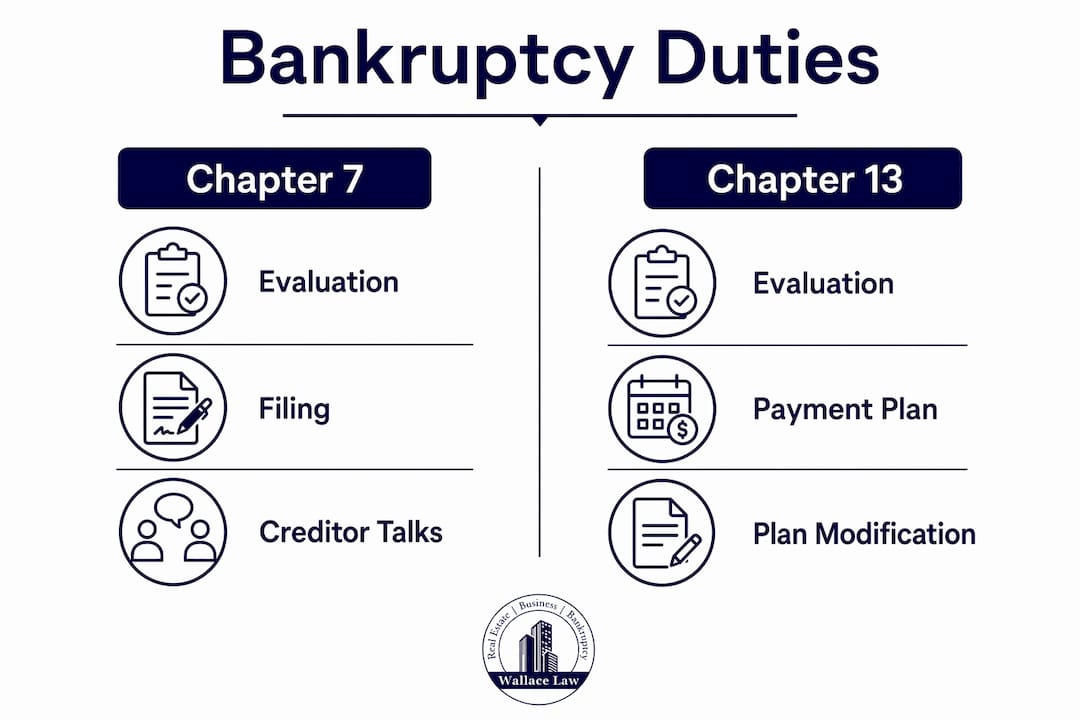
A bankruptcy attorney’s duties begin before a single document is filed. The attorney evaluates your income, assets, and debt types to determine whether Chapter 7 liquidation or Chapter 13 repayment is the right fit, using the means test required under the Bankruptcy Abuse Prevention and Consumer Protection Act of 2005. That upfront analysis alone prevents many filers from choosing the wrong chapter and facing dismissal weeks later.
Once the chapter is confirmed, the attorney prepares and files your petition, schedules, and statement of financial affairs with the court. Accurate schedule preparation is the single most important technical task in any bankruptcy case, because errors or inconsistencies in these documents increase trustee scrutiny and can trigger fraud allegations. Every asset, liability, income source, and recent transaction must be disclosed correctly and under penalty of perjury.
After filing, the attorney manages all creditor communications. Under 11 U.S.C. § 362, the automatic stay immediately halts collection calls, lawsuits, and wage garnishments. When creditors violate that stay, your attorney can enforce the automatic stay through motion practice and hold violators in contempt of court. That enforcement power is something no self-represented filer can realistically exercise without legal training.

The attorney also advises on which debts are dischargeable and which are not. Student loans, certain tax debts, and domestic support obligations typically survive bankruptcy. Comprehensive discharge guidance from an attorney prevents the painful surprise of completing a full bankruptcy case only to discover a major debt remains.
Pro Tip: Ask any attorney you interview to walk you through which of your specific debts will and will not be discharged before you sign anything. That conversation reveals both their knowledge and their communication style.
How does a bankruptcy attorney prepare you for the 341 meeting of creditors?
The 341 meeting of creditors is the one required court appearance in most consumer bankruptcy cases, and your attorney’s preparation for it matters more than anything that happens in the room. Under 11 U.S.C. § 341©, a bankruptcy judge is prohibited from attending this meeting, which means no judicial rulings happen there. The trustee asks questions, creditors may appear, and your answers are given under oath.
Here is what a well-prepared attorney does before and during the 341 meeting:
- Reviews your schedules line by line with you. The trustee will ask questions directly drawn from your filed documents. Any answer that contradicts a schedule creates a credibility problem that can delay or derail your case.
- Coaches you on expected questions. Trustees routinely ask about recent property transfers, business ownership, tax refunds, and changes in income. Your attorney prepares you to answer truthfully and completely without volunteering unnecessary information.
- Attends the meeting with you. The attorney sits beside you, objects to improper questions, and clarifies answers when needed. Attorney attendance at the 341 meeting reduces the risk of follow-up hearings and creditor challenges.
- Manages any post-meeting requests. If the trustee asks for additional documents after the meeting, your attorney responds promptly and correctly to keep the case on track.
The judge’s prohibition at this meeting places the entire burden of credibility on preparation rather than in-hearing advocacy. A client who walks in knowing exactly what to expect and how to answer performs far better than one who is surprised by the process. You can review the 341 meeting preparation checklist from Wallacelawflorida to understand what documents and answers you need ready.
Pro Tip: Bring two forms of government-issued ID and your Social Security card to the 341 meeting. Trustees are required to verify your identity, and missing documents can force a continuance that delays your discharge by weeks.
In what ways do bankruptcy attorneys protect your property and negotiate with creditors?
Property protection is one of the most financially significant functions of a bankruptcy lawyer, and it depends entirely on knowing which exemptions apply to your situation. Florida uses its own state exemption system rather than the federal set, and the differences are substantial. Florida’s homestead exemption is unlimited in value for qualifying properties, while the personal property exemption is capped. An attorney who knows Florida exemption law applies these protections correctly so you keep what you are legally entitled to keep.
Beyond exemptions, attorneys negotiate directly with secured creditors on your behalf. The table below shows how these negotiations differ between Chapter 7 and Chapter 13.
| Situation | Chapter 7 option | Chapter 13 option |
|---|---|---|
| Car loan you want to keep | Reaffirmation agreement at original terms | Include in repayment plan, sometimes at reduced value |
| Car loan you want to eliminate | Redemption at current market value | Surrender and discharge remaining balance |
| Mortgage arrears | Limited options, risk of foreclosure | Cure arrears over 3 to 5 year plan |
| Unsecured debt reduction | Full discharge after liquidation | Partial payment through plan, remainder discharged |
Reaffirmation, redemption, and plan modification negotiations require an attorney who understands both the legal framework and the creditor’s incentives. A creditor holding a car loan on a vehicle worth less than the loan balance has real motivation to negotiate. An attorney who handles these cases regularly knows when to push and when to accept terms.
When a Chapter 13 debtor’s circumstances change after the plan is confirmed, the attorney can seek court modifications or, in qualifying cases, a hardship discharge. These options are invisible to most self-represented filers, who often miss them entirely. Understanding how attorneys handle creditor actions gives you a clearer picture of the protection available to you.
What are the practical benefits and risks of filing without an attorney?
Hiring a bankruptcy attorney typically costs between $1,500 and $6,000 depending on case complexity and chapter type. Attorney fees versus self-filing risks show that the cost of legal errors, dismissed cases, or lost property almost always exceeds the cost of professional representation. That math is not abstract. A dismissed Chapter 7 case means refiling fees, lost time, and a gap in automatic stay protection during which creditors can resume collection.
The practical risks of filing without an attorney include:
- Incomplete or inconsistent schedules that trigger trustee objections or fraud inquiries
- Missed deadlines for filing required documents, attending hearings, or responding to creditor motions
- Wrong chapter selection based on a misread means test, leading to dismissal or conversion
- Unprotected assets because exemptions were not claimed correctly or at all
- Reaffirmation agreements signed without legal review, locking you into debt you could have discharged
“Legal-process complexity is often underestimated. The biggest failure modes for self-filing involve paperwork, deadlines, and legal math errors.” — Experian
The common bankruptcy filing mistakes that Wallacelawflorida documents show a consistent pattern: most avoidable case failures trace back to paperwork errors and missed procedural steps that an attorney would catch before filing. The peace of mind that comes from knowing a trained professional has reviewed every document is a real and measurable benefit, not a luxury.
What should you look for when choosing a bankruptcy attorney?
Choosing the right attorney is as consequential as deciding to file. A general practice attorney who handles bankruptcy occasionally carries far more risk than one who focuses on it. The U.S. Department of Justice distinguishes the debtor’s attorney as an advocate with a specific role separate from the trustee’s oversight function. You need someone who understands that distinction and operates confidently within it.
Key qualities to evaluate include:
- Volume and recency of bankruptcy cases. An attorney who filed 50 Chapter 7 and Chapter 13 cases in the past year knows current trustee preferences and local court procedures far better than one who filed five.
- Issue-spotting ability. Good attorneys flag risks upfront, including means test complications, non-exempt assets, and debts that will survive discharge. If an attorney cannot identify your specific risks in the initial consultation, that is a warning sign.
- Clear communication. You should leave every meeting knowing exactly what happens next, what you need to provide, and what realistic outcomes look like. Vague answers about process or outcomes signal inexperience or disinterest.
- Avoidance of petition mills. Some high-volume operations assign your case to paralegals with minimal attorney oversight. Ask directly who will appear with you at the 341 meeting and who reviews your schedules before filing.
- Familiarity with Florida exemption law. For filers in South Florida, an attorney who knows Broward and Palm Beach County trustee practices gives you a practical advantage that no out-of-state or generalist attorney can match.
You can use the guide to choosing a bankruptcy attorney from Wallacelawflorida to build a list of specific questions before your first consultation.
Key takeaways
A bankruptcy attorney’s value is front-loaded in accurate paperwork, strategic chapter selection, and creditor negotiation, making professional representation the most reliable path to a successful discharge.
| Point | Details |
|---|---|
| Chapter selection matters | An attorney uses the means test and asset analysis to choose Chapter 7 or 13 correctly from the start. |
| 341 meeting preparation is critical | Consistent testimony and document readiness prevent creditor challenges and case delays. |
| Exemptions protect your property | Florida-specific exemption knowledge keeps assets out of the bankruptcy estate that you are legally entitled to keep. |
| Self-filing carries measurable risk | Paperwork errors, missed deadlines, and wrong chapter selection are the leading causes of avoidable case failure. |
| Attorney selection affects outcomes | Focus on bankruptcy-specific experience, issue-spotting skill, and direct attorney involvement in your case. |
Why the attorney’s role goes deeper than paperwork
I have seen firsthand how the difference between a smooth bankruptcy case and a chaotic one almost always comes down to what happened before the petition was filed. Clients who arrive with organized, consistent financial records and a clear understanding of what to expect at the 341 meeting move through the process with far less stress and far fewer complications. The attorney’s preparation work is invisible to the court, but it is the foundation everything else rests on.
What surprises most people is how much of the attorney’s value shows up in creditor negotiations rather than courtroom advocacy. Most consumer bankruptcy cases never involve a contested hearing. The real work is in the reaffirmation negotiation that keeps a client’s car at a manageable payment, or the exemption argument that protects a retirement account from a trustee’s reach. These are quiet victories that never appear in a case summary but make an enormous financial difference.
The uncomfortable truth about choosing a bankruptcy attorney is that the cheapest option is rarely the safest one. Petition mills that process cases at high volume with minimal attorney contact cut corners on exactly the preparation work that prevents problems. I would rather see a client pay more for an attorney who reviews every schedule personally and sits with them before the 341 meeting than save money on a filing that gets dismissed or results in lost property.
Bankruptcy is a legal tool designed to give people a genuine fresh start. The attorney’s role is to make sure you use that tool correctly, completely, and in a way that protects everything you are legally entitled to protect.
— Steven
How Wallacelawflorida helps you through every step of bankruptcy
Facing bankruptcy is stressful enough without trying to decode federal court procedures on your own. Wallacelawflorida provides experienced bankruptcy representation for individuals and families across Boynton Beach, Fort Lauderdale, and surrounding South Florida communities, with attorneys who handle your case personally from the first consultation through discharge.

The team at Wallacelawflorida prepares your schedules with precision, coaches you for the 341 meeting, and negotiates directly with creditors to protect your assets and maximize your discharge. Every client receives direct attorney attention, not a paralegal handoff. If you are ready to understand your options and take the first step toward financial relief, visit the bankruptcy practice page or download the free Florida bankruptcy eBook to get started with clear, practical guidance from attorneys who know Florida bankruptcy law.
FAQ
What does a bankruptcy attorney do for you?
A bankruptcy attorney evaluates your financial situation, selects the correct chapter, prepares and files all required court documents, represents you at the 341 meeting of creditors, and negotiates with creditors to protect your assets and secure a discharge.
How much does a bankruptcy attorney typically cost?
Bankruptcy attorney fees generally range from $1,500 to $6,000 depending on the chapter filed and case complexity. This cost is typically far lower than the financial losses that result from a dismissed case or unprotected assets in a self-filed bankruptcy.
What is the 341 meeting and why does an attorney matter there?
The 341 meeting is a required hearing where a trustee questions the debtor under oath, with no judge present. An attorney prepares you for the trustee’s questions, attends the meeting with you, and prevents answers that could create credibility problems or trigger follow-up proceedings.
Can you file bankruptcy without an attorney?
You can file bankruptcy without an attorney, known as filing pro se, but the risk of dismissal, paperwork errors, and lost property is significantly higher. Most bankruptcy courts strongly recommend professional legal representation, particularly for Chapter 13 cases with complex repayment plans.
What is the difference between a bankruptcy attorney and a bankruptcy trustee?
A bankruptcy attorney represents you as your legal advocate and works to protect your interests. A bankruptcy trustee is a court-appointed official who administers the case, reviews your assets, and distributes funds to creditors. The trustee’s role is oversight, not representation.