

What is reverse mortgage foreclosure and how does the process work?
Reverse mortgage foreclosure is the legal process a lender initiates to recover the loan balance when a borrower fails to meet key obligations or a triggering event occurs. The loan becomes “due and payable,” and if the borrower or heirs don’t repay it, the lender can sell the home to recover the debt. Understanding reverse mortgage foreclosure is not just reassuring; it’s the first step toward doing something about it.
Here’s how the general process flows:
- A triggering event occurs (death, moving out, tax default, etc.)
- The lender sends a “Due and Payable” notice within 30 days
- Borrower or heirs have 30 days to respond
- A repayment or sale window of typically six months follows
- Extensions may be granted under FHA guidelines
- If unresolved, the lender initiates formal foreclosure proceedings
One critical protection: reverse mortgages are non-recourse loans, meaning the lender cannot pursue the borrower or heirs for more than the home’s appraised value. Even if the loan balance exceeds what the home sells for, no one owes the difference.
Heirs play a direct role here. After the borrower’s death, they inherit both the home and the obligation to resolve the loan. They can repay it, sell the home, or purchase it at 95% of its appraised value.

Table of Contents
- What triggers a reverse mortgage foreclosure?
- What does the reverse mortgage foreclosure timeline look like?
- How can you avoid reverse mortgage foreclosure?
- How does Florida law affect your rights during foreclosure?
- What are the financial obligations and costs tied to foreclosure?
- What government programs can help with reverse mortgage foreclosure?
- How does foreclosure affect your credit and future borrowing?
- Wallacelawflorida helps Florida homeowners facing reverse mortgage foreclosure
- Key Takeaways
- FAQ
What triggers a reverse mortgage foreclosure?
Reverse mortgage default occurs when borrowers fail to meet specific loan obligations. These aren’t obscure fine-print clauses. They’re conditions every borrower agrees to at closing.
Common triggers include:
- Death of the last borrower on the loan
- Moving out of the home permanently, including to assisted living
- Failing to occupy the home as a primary residence for 12 or more consecutive months (a nursing home stay, for example)
- Nonpayment of property taxes, homeowners insurance, flood insurance, ground rents, condo fees, or HOA fees
- Failure to maintain the home in reasonable condition
- Not returning the annual occupancy certification the servicer requires
The distinction between a maturity event and a default matters. Death or a permanent move is a maturity event. The loan simply becomes due. Nonpayment of taxes or insurance is a default, and it can trigger foreclosure while the borrower is still living in the home. Both paths lead to the same outcome if ignored.

What does the reverse mortgage foreclosure timeline look like?
The timeline is more structured than most homeowners realize. Lenders must follow HUD and FHA rules that require formal notices and opportunities to cure before any sale can happen.
| Stage | Timeframe | What Happens |
|---|---|---|
| Triggering event | — | Death, move-out, or default occurs |
| Due and Payable notice | Within 30 days | Lender notifies borrower or heirs in writing |
| Response window | 30 days from notice | Borrower or heirs must respond to servicer |
| Repayment or sale period | six months | Heirs repay, sell, or buy home at 95% appraised value |
| Extension requests | Up to two 90-day extensions | Granted if actively trying to repay or sell |
| Foreclosure initiation | roughly a year in some cases | Lender files for foreclosure |
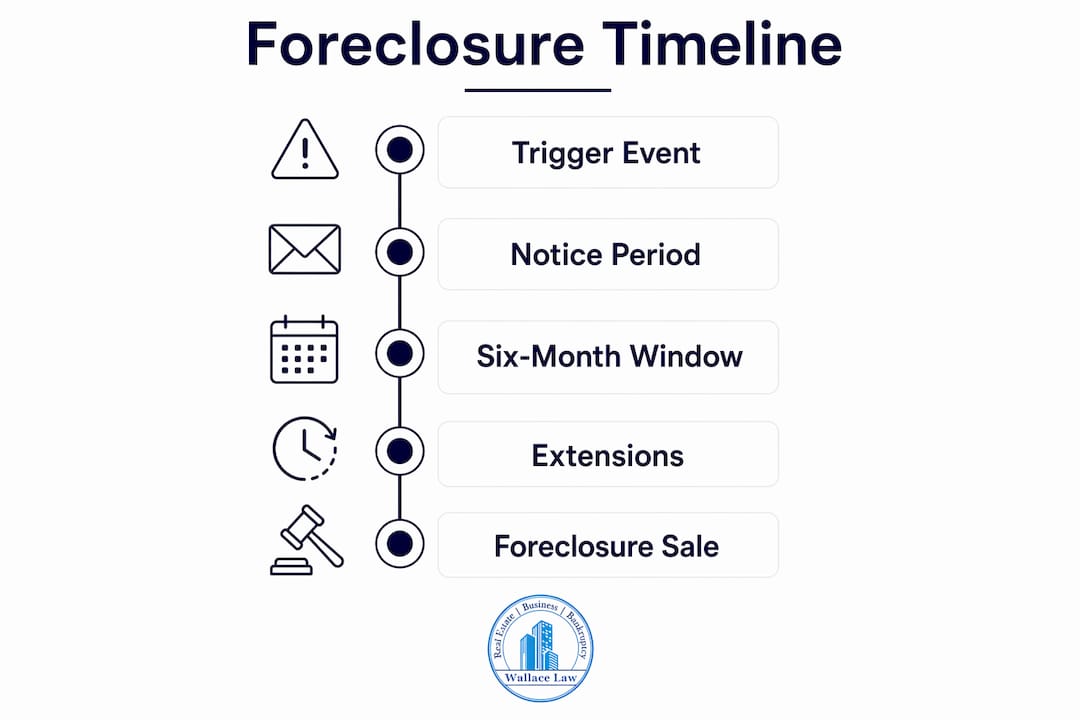
The six-month repayment window is the most important buffer in the process. FHA guidelines also allow up to two 90-day extensions if the borrower or heirs can show active efforts to sell or refinance. That means the total window can stretch to roughly a year in some cases, which is enough time to list a home and close a sale.
The clock starts the moment the triggering event occurs, not when the notice arrives.
How can you avoid reverse mortgage foreclosure?
Acting immediately after receiving any default or foreclosure notice is the single most effective thing you can do. Ignoring the notice or delaying communication with the servicer is the primary reason homeowners lose their homes in these situations.
Practical options to stop the process:
- Pay the outstanding balance on taxes, insurance, or HOA fees if that’s the default reason
- Sell the home and use the proceeds to repay the loan
- Refinance into a traditional mortgage if you qualify
- Request a repayment extension while actively listing or negotiating a sale
- Pursue a deed in lieu of foreclosure to voluntarily transfer the home to the lender and avoid a formal foreclosure sale
A deed in lieu of foreclosure is worth understanding. It won’t save the home, but it can reduce the legal and financial fallout compared to a contested foreclosure. The lender accepts the deed, the loan is satisfied, and the process ends without a court judgment.
You can also dispute servicer notices in writing if you believe the default claim is inaccurate. Servicers are required to respond, and a formal dispute can pause certain actions while the issue is reviewed.
Pro Tip: Contact a HUD-approved housing counselor before responding to any default notice. HUD maintains a counselor locator where you can find free or low-cost help specific to reverse mortgages.
How does Florida law affect your rights during foreclosure?
Florida is a judicial foreclosure state. That means the lender must file a lawsuit and obtain a court judgment before selling the home. This gives borrowers and heirs more time and more legal leverage than in non-judicial states, but it also creates a hard deadline that many people miss.
Once you’re served with a foreclosure summons in Florida, you typically have 20 days to file a formal response with the court. Calling the servicer is not enough. Failing to file that response results in a default judgment, which accelerates the loss of the home significantly.
Key Florida-specific steps:
- File a written response with the court within the deadline stated on the summons
- Assert any defenses you have (improper notice, servicer error, occupancy disputes)
- Request mediation through Florida’s foreclosure mediation program if available
- Consult an attorney before the response deadline, not after
Heirs have the same right to respond and defend as borrowers. If you inherited a home with a reverse mortgage and received a foreclosure summons, you have standing to contest it.
For a step-by-step breakdown of how to file your response, the foreclosure defense response guide at Wallacelawflorida covers the Florida-specific requirements in detail.
What are the financial obligations and costs tied to foreclosure?
The loan balance on a reverse mortgage grows over time because interest accrues monthly and adds to the principal. By the time a foreclosure notice arrives, the balance can be considerably higher than the original loan amount. Borrowers and heirs are responsible for that full balance, up to the home’s value.
Costs that can accumulate during the foreclosure process include unpaid property taxes, insurance premiums, HOA fees, attorney fees, court filing costs, and property preservation fees charged by the servicer. These don’t disappear when the home sells. They’re deducted from the sale proceeds before any remaining equity reaches the heirs. Because reverse mortgages are non-recourse, heirs are never personally liable for a shortfall if the home sells for less than the loan balance.
What government programs can help with reverse mortgage foreclosure?
HUD and the FHA administer the Home Equity Conversion Mortgage (HECM) program, which covers the vast majority of reverse mortgages in the United States. Built into HECM rules are the notice requirements, extension rights, and cure opportunities described throughout this article.
Beyond those built-in protections, several resources are available:
- HUD-approved housing counselors provide free or low-cost guidance on reverse mortgage defaults and foreclosure options
- The Eldercare Locator, run by the U.S. Administration on Aging at eldercare.acl.gov, connects older homeowners with local assistance programs
- Legal Services Corporation (LSC) funds legal aid organizations that help low-income homeowners facing foreclosure at no cost
- State Area Agencies on Aging can connect homeowners with home repair assistance programs if property condition is the basis for default
If you need help preparing legal documents related to a foreclosure response or deed transfer, legal document preparation services can assist with paperwork outside the scope of attorney representation.
How does foreclosure affect your credit and future borrowing?
A reverse mortgage foreclosure appears on your credit report and can lower your score significantly, similar to a traditional foreclosure. The impact typically remains on the report for seven years. Future mortgage applications, rental applications, and some employment screenings will reflect it.
That said, the non-recourse nature of reverse mortgages means no deficiency judgment follows you. You won’t owe a lender money after the home sells. The credit damage is real, but the financial liability stops at the home’s value. Heirs who were not co-borrowers on the original loan generally don’t see their own credit affected by the foreclosure, though they should confirm this with a credit counselor given their specific situation.
Wallacelawflorida helps Florida homeowners facing reverse mortgage foreclosure
Facing a reverse mortgage foreclosure notice in Florida is stressful, and the deadlines are unforgiving. Wallacelawflorida works directly with homeowners and heirs in Boynton Beach and surrounding South Florida communities to respond to foreclosure actions, assert legal defenses, and protect whatever equity remains.
Unlike larger firms where you become a file number, Wallacelawflorida’s attorneys know Florida foreclosure law and take the time to understand your specific situation, whether you’re a surviving spouse, an heir managing an estate, or a borrower dealing with a tax default. The firm handles residential real estate legal matters from initial notice through court proceedings, and can advise on whether selling, refinancing, or contesting the foreclosure is the right path for you. Contact Wallacelawflorida to schedule a consultation before your response deadline passes.
Key Takeaways
Reverse mortgage foreclosure follows a regulated timeline, and borrowers or heirs who respond promptly have real options to repay, sell, or contest the action before losing the home.
| Point | Details |
|---|---|
| Triggering events | Death, moving out, tax nonpayment, or home neglect all make the loan due and payable. |
| Response window | Lenders must send a Due and Payable notice within 30 days; borrowers have 30 days to respond. |
| Six-month sale period | Heirs typically have six months to repay or sell, with up to two 90-day extensions available. |
| Non-recourse protection | Lenders cannot pursue borrowers or heirs for more than the home’s appraised value. |
| Wallacelawflorida | Provides Florida-specific foreclosure defense for homeowners and heirs facing reverse mortgage actions. |
FAQ
What happens if you foreclose on a reverse mortgage?
The lender sells the home to recover the loan balance. Because reverse mortgages are non-recourse loans, neither the borrower nor the heirs owe anything beyond the home’s value, even if the sale proceeds fall short.
How long does a reverse mortgage foreclosure take?
After a triggering event, the process typically spans six months before foreclosure can begin, with possible extensions of up to two additional 90-day periods if the borrower or heirs are actively working to repay or sell.
What is the six-month rule for reverse mortgages?
Under FHA guidelines, heirs have six months after the loan becomes due to repay the balance, sell the home, or purchase it at 95% of its appraised value before the lender can proceed with foreclosure.
Can you lose your home with a reverse mortgage?
Yes. Failing to pay property taxes, insurance, or HOA fees, or not maintaining the home as a primary residence, can trigger foreclosure. Responding quickly to any default notice and exploring legal options is the most effective way to prevent it.
What is the dark side of a reverse mortgage?
The loan balance grows every month as interest accrues, which can erode or eliminate home equity over time. If the borrower later needs to move or the heirs want to keep the home, the accumulated balance can make that difficult or impossible without a significant cash payment.