

TL;DR:
- The Florida business dissolution process is a legal procedure that terminates a company’s existence by obtaining owner approval, filing Articles of Dissolution, and settling all debts and taxes. Owners must follow specific steps, including proper winding up, creditor notification, and final tax filings, to avoid personal liability and legal issues. Proper sequence and thorough documentation are essential to ensure a clean and lawful business closure.
The florida business dissolution process is the official legal procedure that ends your company’s existence in the state, requiring owner approval, document filings with the Florida Department of State, and a structured wind-down of all business affairs. Simply closing your doors is not enough. Without completing every required step, your business remains legally active, and you stay personally exposed to taxes, penalties, and creditor claims. This guide covers the exact sequence: internal approvals, Articles of Dissolution filing through Sunbiz, creditor notifications under Florida Revised LLC Act Chapter 605, and final federal tax obligations including IRS Form 966.
What approvals are required before filing for dissolution in florida?
The first step in any business dissolution in Florida is reviewing your governing documents. Operating agreements and bylaws specify dissolution triggers, voting requirements, and how assets get divided when a business closes. Skipping this review is one of the most common early mistakes owners make.
Your governing documents control the process in three key ways:
- Voting threshold: Most LLCs require a majority or unanimous member vote to dissolve. Corporations typically need a board resolution followed by shareholder approval.
- Dissolution triggers: Some agreements specify automatic dissolution events, such as a partner’s death, retirement, or a deadlock between owners.
- Asset distribution rules: The agreement dictates how remaining assets are split after debts are paid, which affects the order of your wind-down steps.
Once you confirm the voting requirements, document the decision formally. For LLCs, this means a written resolution signed by the required members. For corporations, you need board meeting minutes and a shareholder vote on record. A verbal agreement among owners is not sufficient and will not protect you if a dispute arises later.
Pro Tip: If your operating agreement is silent on dissolution procedures, Florida’s default rules under Chapter 605 apply. Review those statutes before calling a vote so you know exactly what threshold you need.

Identify the specific event that triggered dissolution. Common triggers include a business deadlock, the expiration of a fixed term in the agreement, or a mutual decision to retire. Naming the trigger in your resolution strengthens the paper trail and reduces the risk of a future ownership dispute.
How do you file articles of dissolution through sunbiz?
Filing Articles of Dissolution with the Florida Department of State through the Sunbiz portal is the official act that begins your entity’s legal dissolution on the state record. The filing fee for an LLC is approximately $25, though you should confirm the current amount on the Sunbiz website before submitting. Online filings process faster than paper submissions, so use the electronic option whenever possible.
Here is the exact sequence for completing the Sunbiz filing:
- Gather your entity information. You need the exact legal name of your business as registered with the state, plus your document number from the Sunbiz database.
- Confirm your dissolution date. The dissolution resolution date must fall within 90 days before or after the date you file. Dates outside that window will cause the filing to be rejected.
- Complete the dissolution form. Enter your legal business name, document number, the date of the dissolution resolution, and the name of the authorized signatory.
- Pay the filing fee. Submit payment through the Sunbiz portal. Keep the confirmation receipt as proof of filing.
- Save your confirmation document. Sunbiz generates a stamped confirmation once the filing is processed. Store this document permanently. You may need it for bank account closures, tax filings, and creditor negotiations.
Pro Tip: Search your business on Sunbiz before filing to confirm your exact registered name and document number. Even a minor spelling difference between your filing and the state record will cause a rejection and delay your timeline.
The Articles of Dissolution do not automatically end all your obligations. They signal the start of the wind-down period, not the finish line. Many owners file the articles and assume the process is complete. That misunderstanding creates serious liability.
How to wind up business affairs and handle creditor claims
Winding up is a substantive legal process, not a formality. Proper winding up includes ending contracts, canceling licenses, closing bank accounts, and completing final tax filings after settling all debts and creditor claims. Under Florida Revised LLC Act Chapter 605, the creditor-claims process includes specific timelines for sending rejection notices and treating creditor submissions.
The wind-down sequence matters as much as the individual steps:
- Notify creditors in writing. Send formal written notice to all known creditors stating that the business is dissolving and setting a deadline for submitting claims. Florida statute sets minimum timeframes for this process.
- Settle outstanding debts. Pay all valid creditor claims before touching any remaining assets. This order is not optional.
- Cancel licenses and permits. Contact the Florida Department of Business and Professional Regulation and any local licensing authorities to cancel active permits. Review your business license obligations to confirm every active license is addressed.
- Terminate contracts. Review all vendor agreements, leases, and service contracts. Send written termination notices according to each contract’s terms.
- Close bank accounts. Once all debts are paid and checks have cleared, close all business bank accounts and redirect any remaining funds for final distribution.
- Distribute remaining assets. Only after all creditor claims are resolved do you distribute remaining assets to members or shareholders according to your governing documents.
Critical warning: Distributing assets before resolving creditor claims exposes owners to personal liability for any unpaid debts. This is the single most expensive mistake made during Florida LLC dissolution procedures.
Pro Tip: Keep a written log of every creditor notification, including the date sent, the method used, and the response received. This documentation is your primary defense if a creditor later claims they were not properly notified.
The wind-down period can take weeks or months depending on the complexity of your business. Do not rush it to save time. Cutting corners here creates problems that outlast the business itself.
What tax filings are required when closing a florida business?
Tax obligations do not end when you file your Articles of Dissolution. Final federal and state tax returns must be filed and marked as “final,” and all tax accounts must be formally closed to avoid ongoing penalties. Missing these steps is one of the most common reasons dissolved businesses accumulate unexpected tax debt.
Here is what you must address on the tax side:
- IRS Form 966: Corporations must file this form within 30 days of adopting the dissolution plan. The Form 966 deadline is triggered by the internal plan adoption date, not the Sunbiz filing date. These two dates can differ significantly, so track them separately.
- Final federal income tax return: File your last Form 1120 (corporation) or Form 1065 (partnership) and check the “final return” box. LLCs taxed as sole proprietorships report on Schedule C of the owner’s personal return.
- Final Florida state return: File your last Florida corporate income tax return with the Florida Department of Revenue and mark it final.
- Final payroll tax forms: If you had employees, file Form 941 for the final quarter, Form 940 for the final year, and issue W-2s to all employees.
- Cancel tax accounts: Contact the IRS to close your Employer Identification Number account. Notify the Florida Department of Revenue to close your state tax accounts.
Tax timing nuances require you to synchronize your state filing schedule with IRS dissolution plan adoption deadlines. A mismatch between these two calendars is a common source of missed filings and penalties.
What are the most common mistakes in the florida business dissolution process?
Many owners confuse filing dissolution documents with completing the dissolution process. Winding down must come before state filings to protect owners from ongoing obligations. That sequence is the foundation of a clean closure.
Watch for these specific errors:
- Filing Articles of Dissolution too early. Submitting the Sunbiz filing before completing creditor notifications and settling debts leaves you legally exposed.
- Skipping the winding-up process entirely. Some owners simply stop operating and file the dissolution form. This does not extinguish creditor claims or tax obligations.
- Missing the IRS Form 966 deadline. Corporations that miss the 30-day window after adopting their dissolution plan face penalties that accumulate quickly.
- Failing to mark final returns correctly. A tax return not marked “final” signals to the IRS and Florida Department of Revenue that the business is still active, triggering future filing requirements.
- Confusing voluntary and administrative dissolution. Administrative dissolution occurs when a business misses its annual report deadline, typically taking effect in September of the filing year. It does not resolve creditor claims or tax obligations the way a voluntary dissolution does.
Pro Tip: Build a written dissolution checklist that maps each step to a deadline. Assign responsibility for each item to a specific person. Ambiguity about who handles the IRS filing or the creditor notices is how things fall through the cracks.
If your business has significant debts, active litigation, or multiple owners with competing interests, get professional legal help before you start. The cost of an attorney is far lower than the cost of a personal liability judgment.
Key takeaways
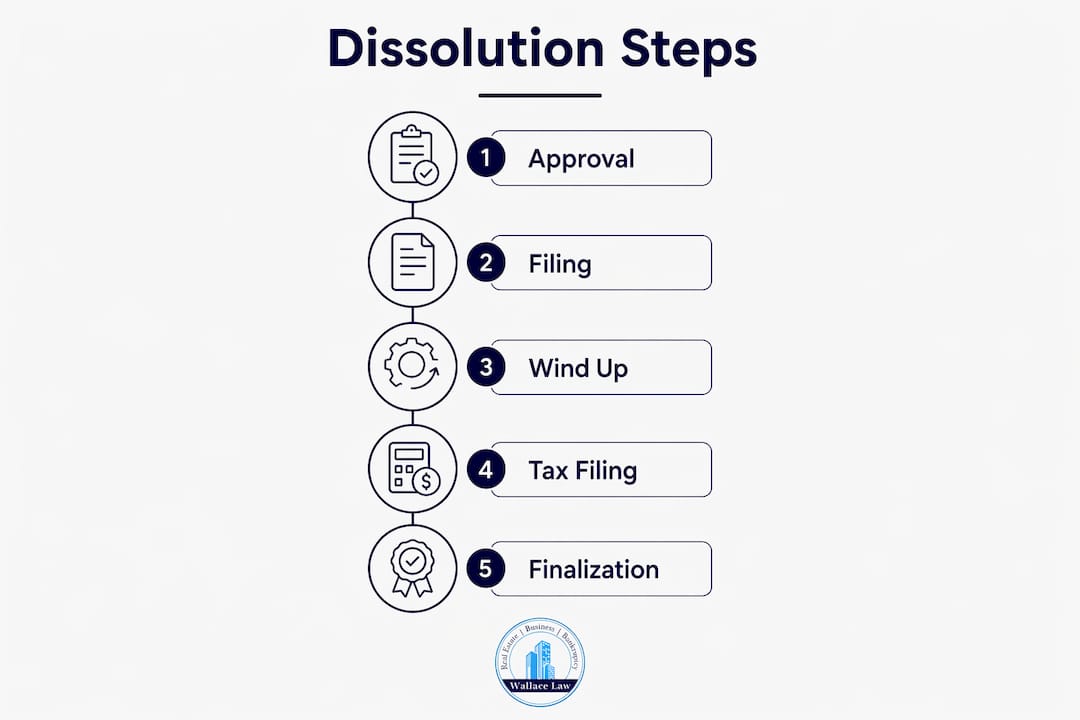
Closing a Florida business requires completing the full legal sequence: internal approval, state filing, creditor wind-down, and final tax closure, in that order.
| Point | Details |
|---|---|
| Approval comes first | Review governing documents and document the dissolution vote before any state filings. |
| Sunbiz filing is the official start | File Articles of Dissolution online with the correct entity data and a resolution date within 90 days of filing. |
| Wind-down protects owners | Notify creditors, settle debts, and cancel licenses before distributing any remaining assets. |
| Tax deadlines are separate | IRS Form 966 is due 30 days after plan adoption, not after the Sunbiz filing date. |
| Sequence prevents liability | Filing before winding down leaves owners personally exposed to unpaid creditor claims. |
What i’ve learned after watching owners rush this process
Most business owners treat dissolution like a single transaction. They file the paperwork, assume it is done, and move on. That assumption is where the real problems start.
The owners I have seen get into trouble almost always made one of two mistakes. They either distributed assets before creditor claims were resolved, or they filed their Articles of Dissolution without coordinating their IRS timeline. Both errors are easy to avoid with a clear sequence and a written checklist. Both are expensive to fix after the fact.
The part of this process that surprises people most is the tax coordination. The IRS Form 966 deadline runs from the date you internally adopt your dissolution plan, not from the date Florida processes your filing. Those two dates can be weeks apart. If you adopt your plan in January and do not file with Sunbiz until March, your Form 966 was due in February. That gap catches a lot of corporations off guard.
My honest recommendation is this: if your business has more than two owners, active contracts, or any outstanding debt, do not attempt this without legal counsel. The Florida LLC dissolution procedures are not complicated, but they are sequential and unforgiving. One step out of order can undo the protection the process is designed to give you.
— Steven
How Wallacelawflorida helps florida business owners close cleanly
Closing a business involves more moving parts than most owners expect. Wallacelawflorida provides Florida business law support for owners navigating dissolution, from reviewing governing documents and drafting dissolution resolutions to coordinating creditor notifications and final tax filings. The firm serves clients in Boynton Beach and surrounding South Florida communities with direct attorney access and personalized guidance.

If your business carries debt, has multiple members, or faces creditor disputes, Wallacelawflorida can help you work through the wind-down process without exposing yourself to personal liability. Contact the firm directly to discuss your specific situation and get a clear plan before you file a single document.
FAQ
What is the florida business dissolution process?
The Florida business dissolution process is the legal sequence for ending a business entity’s existence, including obtaining owner approval, filing Articles of Dissolution with the Florida Department of State through Sunbiz, notifying creditors, settling debts, and filing final tax returns.
How much does it cost to dissolve a florida LLC?
The state filing fee for dissolving a Florida LLC is approximately $25 through the Sunbiz portal. Additional costs may include attorney fees, tax preparation, and creditor settlement amounts depending on your business’s financial situation.
When is IRS form 966 due for a dissolving corporation?
IRS Form 966 is due within 30 days of adopting the corporate dissolution plan. This deadline is triggered by the internal plan adoption date, not the date Florida processes your Articles of Dissolution.
What happens if you skip the winding-up process?
Skipping the winding-up process leaves creditor claims unresolved and can expose business owners to personal liability for unpaid debts. It also does not extinguish ongoing tax obligations with the IRS or the Florida Department of Revenue.
What is administrative dissolution in florida?
Administrative dissolution occurs when a Florida LLC fails to file its required annual report, with the state dissolving the entity automatically, typically in September of the filing year. Unlike voluntary dissolution, administrative dissolution does not resolve outstanding creditor claims or tax accounts.