

TL;DR:
- Chapter 7 wipes out unsecured debt quickly by liquidating nonexempt assets, while Chapter 13 restructures debts over several years through a repayment plan. Eligibility depends on income, debt limits, and prior bankruptcy history, with Chapter 7 favoring those below median income and Chapter 13 suited for higher earners or homeowners protecting assets. The chapters differ significantly in asset treatment, foreclosure options, timeline, costs, and credit reporting, making the best choice highly dependent on individual financial goals and circumstances.
Chapter 7 and Chapter 13 bankruptcy are the two most common forms of personal debt relief available under U.S. federal law, and the difference between Chapter 7 and 13 comes down to one fundamental choice: liquidate your debts fast or restructure them over time. Chapter 7 wipes out most unsecured debt within months, while Chapter 13 puts you on a multi-year repayment plan that lets you hold onto property you would otherwise lose. Your income, your assets, and what you most want to protect will determine which path makes sense. This guide breaks down every major distinction so you can walk into any conversation with a bankruptcy attorney already knowing where you stand.
What are the eligibility requirements for Chapter 7 and Chapter 13?
Eligibility is the first filter, and the rules for each chapter are specific enough that many people have no real choice between them.
Chapter 7 eligibility centers on the means test. Your average monthly income over the six months before filing is compared to your state’s median income. If you fall below the median, you qualify automatically. If you exceed it, you must pass a second calculation that weighs allowable expenses against disposable income. Fail that second test and Chapter 7 is unavailable to you regardless of how much debt you carry.
Chapter 13 eligibility works differently. You need a regular source of income, whether from employment, self-employment, or even consistent rental income. You also must fall within debt limits. As of 2022 through 2025, Chapter 13 debt caps sit at under $465,275 in unsecured debt and under $1,395,875 in secured debt. Exceed either ceiling and Chapter 13 is off the table until you explore other options.
Additional restrictions apply to repeat filers. If a prior bankruptcy was dismissed within the last 180 days due to willful failure to comply with court orders, you cannot immediately refile. If you received a Chapter 7 discharge within the past eight years, you cannot file Chapter 7 again. A prior Chapter 13 discharge within the past six years also blocks a new Chapter 7 filing unless specific repayment thresholds were met in the earlier case.
- Chapter 7 requires passing the means test based on income relative to your state’s median
- Chapter 13 requires regular income and staying within the unsecured and secured debt limits
- Recent prior bankruptcies trigger waiting periods that can force you into one chapter or the other
- Business debts are excluded from the means test calculation, which can help self-employed filers qualify for Chapter 7
Pro Tip: If you are right on the edge of the Chapter 7 means test, timing your filing date by even one month can shift which six-month income window is used. A bankruptcy attorney can run the numbers before you commit.
How do Chapter 7 and Chapter 13 differ in handling assets and property?
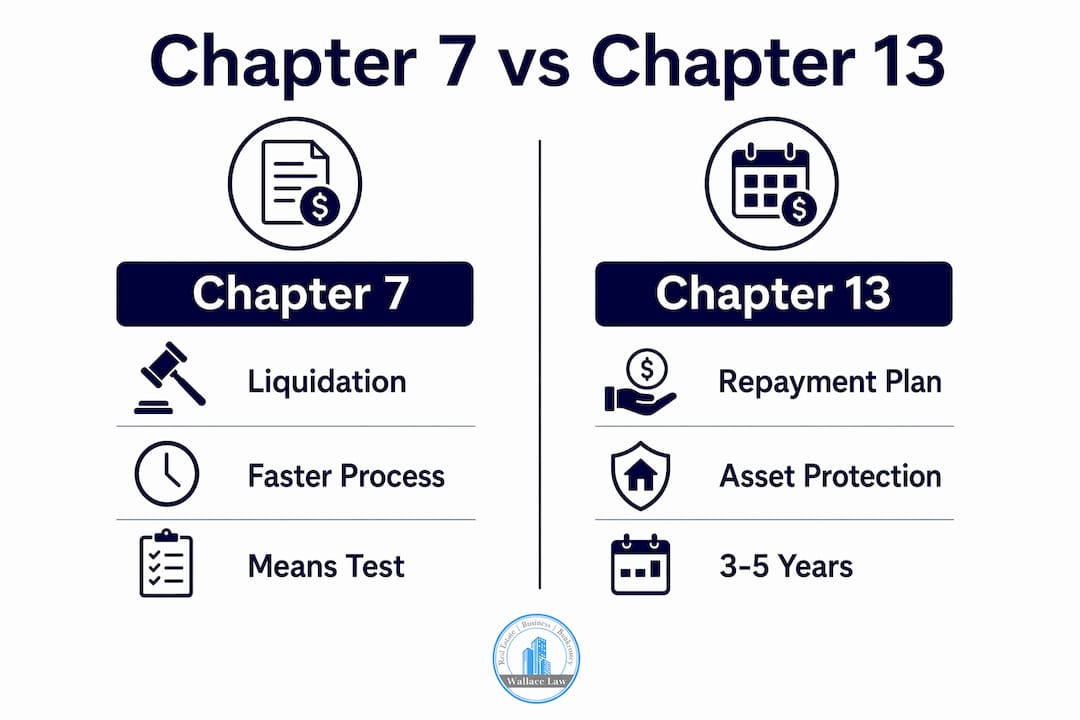

This is where the chapter 7 vs chapter 13 comparison gets personal. What happens to your home, your car, and your savings depends entirely on which path you take.
Under Chapter 7, a court-appointed trustee reviews everything you own. Property that falls outside your state’s exemption limits is sold, and the proceeds go to creditors. Nonexempt assets are liquidated to repay what you owe. Florida offers strong exemptions, including an unlimited homestead exemption for your primary residence, but personal property exemptions are more limited. If you own a second car worth more than the exemption threshold, the trustee can sell it.
The distinction between outright ownership and protected equity under exemption laws is a factor many filers overlook entirely. You might own a vehicle free and clear, but if its value exceeds your state’s motor vehicle exemption, that equity is exposed under Chapter 7. Under Chapter 13, you keep all your property by paying creditors at least the value of your nonexempt assets through your repayment plan.
| Feature | Chapter 7 | Chapter 13 |
|---|---|---|
| Property treatment | Nonexempt assets sold by trustee | All property retained; nonexempt value repaid through plan |
| Home foreclosure | Automatic stay buys time; no permanent cure | Mortgage arrears cured over plan period |
| Car loans | Surrender, reaffirm, or redeem | Cramdown option may reduce loan balance to car’s value |
| Exemption strategy | Critical; limits what you keep | Less urgent; assets protected through repayment |
Chapter 13 is the only chapter that lets you cure mortgage arrears and stop foreclosure permanently over the plan period. Chapter 7 triggers an automatic stay that halts foreclosure temporarily, but once the case closes, the lender can resume proceedings if you are still behind. For homeowners facing foreclosure, the foreclosure defense options under Chapter 13 are far more durable.
Pro Tip: Chapter 13 also allows a “cramdown” on car loans, reducing the principal to the vehicle’s current market value if the loan is more than 910 days old. This can save thousands on an underwater auto loan.
What is the timeline and cost difference between Chapter 7 and Chapter 13?
Speed and cost are two of the most practical factors in any bankruptcy decision, and the gap between the two chapters is significant.
Chapter 7 completes in 3 to 6 months, making it the faster route to a clean financial slate. Chapter 13, by contrast, runs 3 to 5 years because the repayment plan must play out in full before discharge is granted. The length of a Chapter 13 plan is tied directly to your income. Filers below the state median income qualify for a 3-year plan, while those at or above the median are required to commit to a 5-year plan, capped at 60 months.
| Cost Factor | Chapter 7 | Chapter 13 |
|---|---|---|
| Court filing fee | $338 | $313 |
| Average attorney fee | $1,000 to $1,500 | Higher due to complexity |
| Total process length | 3 to 6 months | 3 to 5 years |
| Monthly plan payments | None | Required throughout plan |
Filing fees are $338 for Chapter 7 and $313 for Chapter 13. Attorney fees for Chapter 7 average $1,000 to $1,500, while Chapter 13 attorneys typically charge more given the ongoing case management required over years. The emotional weight of a multi-year repayment commitment is also real. Missing even a few plan payments can result in case dismissal, which strips you of the protections the filing provided.
How do Chapter 7 and Chapter 13 affect debts and credit reporting?
Not all debts are treated equally under either chapter, and understanding what gets discharged matters as much as understanding the process itself.
Chapter 7 discharges most unsecured debts, including credit card balances, medical bills, and personal loans. Chapter 13 discharges a broader range of debts after plan completion, including some that Chapter 7 cannot touch, such as certain tax obligations and marital property settlement debts. Both chapters leave specific debts intact regardless of which you file.
Debts that survive both Chapter 7 and Chapter 13 include:
- Child support and alimony
- Most federal student loans
- Criminal fines and restitution
- Debts from fraud or willful misconduct
- Most recent income tax debts
The credit reporting difference between the two chapters is one of the most overlooked factors in the chapter 7 vs chapter 13 comparison. Chapter 7 stays on your credit report for up to 10 years from the filing date, while Chapter 13 remains for only 7 years. That three-year difference can matter significantly if you plan to apply for a mortgage or business loan within a decade of filing. Understanding how bankruptcy affects your credit before you file helps you plan your financial recovery from day one.
Rebuilding credit after either chapter is possible. Secured credit cards, credit-builder loans, and consistent on-time payments on any remaining obligations all accelerate recovery. Chapter 13 filers who complete their plan often demonstrate a track record of financial discipline that lenders recognize.
Which bankruptcy chapter fits your financial situation?
Eligibility tells you what you can file. Your financial goals tell you what you should file. These are not always the same answer.
-
You have limited income and few assets. Chapter 7 is the direct path. You pass the means test, the trustee finds little to liquidate, and you receive a discharge in under six months. This is the scenario Chapter 7 was designed for.
-
You are behind on your mortgage and want to keep your home. Chapter 13 is the only option that lets you cure arrears over time while keeping the property. Chapter 7 is better suited for those with limited assets, not for homeowners trying to stop a foreclosure permanently.
-
Your income exceeds the Chapter 7 means test threshold. Chapter 13 becomes your primary option by default. The repayment plan is structured around your disposable income after allowable expenses, so higher earners pay more but still receive protection from creditors.
-
You have significant nonexempt assets you want to protect. Chapter 13 lets you keep everything by paying the equivalent value through your plan. Chapter 7 would expose those assets to the trustee.
-
You have an underwater car loan more than 910 days old. The cramdown provision under Chapter 13 can reduce the loan balance to the vehicle’s current market value, a tool that does not exist under Chapter 7.
Pro Tip: Someone might qualify for Chapter 7 but choose Chapter 13 to permanently stop a foreclosure or protect assets worth more than their exemptions cover. Eligibility and best outcome are two different questions.
Income stability is the hidden requirement for Chapter 13 success. Consistent plan compliance over 3 to 5 years requires that your income remain predictable. If your work is seasonal or your income fluctuates significantly, a Chapter 13 plan can become difficult to maintain. That risk deserves honest consideration before you commit.
Key takeaways
Chapter 7 discharges debt fast through liquidation, while Chapter 13 protects assets through a structured repayment plan lasting 3 to 5 years.
| Point | Details |
|---|---|
| Eligibility is not the same as best fit | Qualifying for Chapter 7 does not mean it serves your goals better than Chapter 13. |
| Asset protection favors Chapter 13 | Chapter 13 lets you keep all property by repaying nonexempt value through the plan. |
| Timeline gap is significant | Chapter 7 closes in 3 to 6 months; Chapter 13 runs 3 to 5 years depending on income. |
| Credit report duration differs | Chapter 7 stays on your report for 10 years; Chapter 13 clears after 7 years. |
| Foreclosure cure requires Chapter 13 | Only Chapter 13 permanently resolves mortgage arrears and stops foreclosure long-term. |
What I’ve learned after years of watching clients choose the wrong chapter
Most people walk into a bankruptcy consultation focused entirely on whether they qualify. That is the wrong starting question. The right question is: what do you most want to protect?
I have seen clients choose Chapter 7 because it was faster, only to lose a vehicle or a piece of property they could have kept under Chapter 13. I have also seen clients commit to a 5-year Chapter 13 plan with income that was never stable enough to sustain it, resulting in dismissal and no discharge at all. Both outcomes were avoidable.
The bankruptcy chapter differences that matter most are not the legal technicalities. They are the practical ones: Can you realistically make a plan payment every month for five years? Do you have equity in a home worth protecting? Is the three-year difference in credit reporting worth the trade-off of a longer repayment commitment? These are judgment calls, not legal tests.
My honest advice is to stop treating this as a research problem you can solve alone. The means test, exemption calculations, and plan feasibility analysis all require someone who knows Florida law specifically. A qualified bankruptcy attorney near you will run your actual numbers, not hypotheticals, and tell you which chapter gives you the outcome you are actually after.
— Steven
Get bankruptcy guidance tailored to your situation
If you are weighing Chapter 7 against Chapter 13, the details of your income, assets, and debts determine everything. Generic information only gets you so far.

Wallacelawflorida serves individuals and families in Boynton Beach and across South Florida who need clear, experienced guidance through the bankruptcy process. The attorneys at Wallace Law understand both chapters in depth and take the time to match your specific financial picture to the right legal strategy. Whether you need a fast discharge or a plan that protects your home, the bankruptcy practice at Wallace Law is built for exactly this kind of decision. Schedule a consultation and get answers based on your actual situation, not a general overview.
FAQ
What is the main difference between Chapter 7 and Chapter 13?
Chapter 7 is liquidation bankruptcy that discharges most unsecured debt within 3 to 6 months by selling nonexempt assets. Chapter 13 is reorganization bankruptcy that lets you keep property by repaying creditors through a 3 to 5 year court-approved plan.
Who qualifies for Chapter 7 bankruptcy?
You must pass the means test, which compares your average monthly income over the prior six months to your state’s median income. If your income exceeds the median, a second calculation determines whether your disposable income is low enough to qualify.
Can Chapter 13 stop a foreclosure?
Yes. Chapter 13 is the only bankruptcy chapter that permanently cures mortgage arrears by spreading them across the repayment plan, allowing you to keep your home as long as you remain current on both plan payments and ongoing mortgage payments.
How long does bankruptcy stay on your credit report?
Chapter 7 remains on your credit report for up to 10 years from the filing date, while Chapter 13 stays for 7 years. The shorter reporting window under Chapter 13 can make it a better long-term choice for borrowers who plan to apply for credit within a decade.
Can you keep your car in Chapter 7 bankruptcy?
You can keep your car in Chapter 7 if you reaffirm the loan, redeem the vehicle by paying its current market value in a lump sum, or if the vehicle’s equity falls within your state’s motor vehicle exemption. Chapter 13 offers an additional option through cramdown, which can reduce the loan balance to the car’s actual value.