

Starting a business in Florida without understanding the full scope of business license requirements Florida imposes can cost you real money. Many entrepreneurs assume there’s one statewide license to grab and they’re done. There isn’t. Florida operates on a layered system where your location, industry, and workforce each trigger different obligations at the city, county, and state level. Get any layer wrong and you’re looking at fines, forced closures, or operating without legal standing. This guide breaks down every layer so you can launch and stay compliant with confidence.
Table of Contents
- Key takeaways
- Business license requirements Florida: the local layer explained
- State-level licenses: DBPR and beyond
- Tax registrations you cannot skip
- Step-by-step: from formation to licensed and compliant
- Common compliance mistakes that cost Florida businesses
- My take on Florida’s licensing reality
- How Wallacelawflorida can help you get this right
- FAQ
Key takeaways
| Point | Details |
|---|---|
| No statewide business license | Florida requires local and industry-specific licenses, not one blanket state permit. |
| Local tax receipts are mandatory | Most businesses need a Local Business Tax Receipt from the county and city where they operate. |
| DBPR governs many professions | Contractors, cosmetologists, real estate agents, and food service operators need state-level licenses. |
| Tax registrations are separate | You must register for a sales tax certificate and reemployment tax independently of your business license. |
| Renewals are non-negotiable | Missing annual renewal deadlines leads to fines and potential closure of your business. |
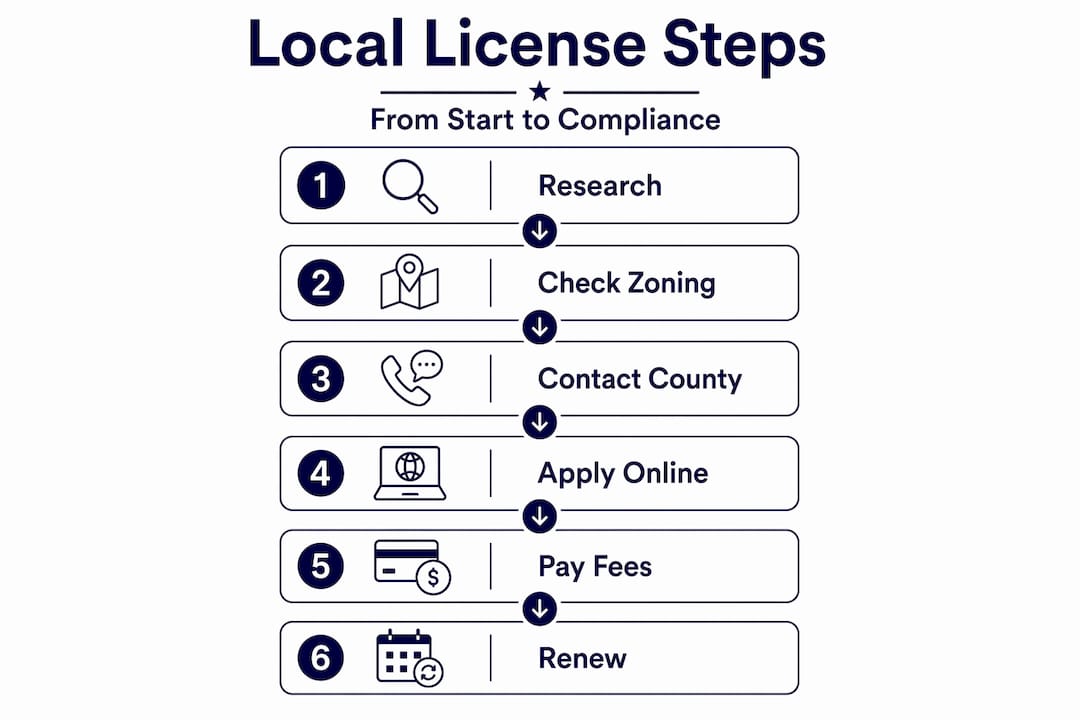
Business license requirements Florida: the local layer explained
The single biggest misconception about business licenses required Florida entrepreneurs need is that there’s one document that covers everything. There isn’t. Florida has no statewide general business license. What you actually need first is a Local Business Tax Receipt, commonly called an LBTR, issued by your county and sometimes your city as well.
Think of the LBTR not as a competency certificate but as a tax on the privilege of doing business in that jurisdiction. Local Business Tax Receipts must be displayed prominently at your place of business and renewed every year by September 30. Missing that deadline isn’t just an inconvenience. It can trigger penalties that compound quickly.
Here’s what you need to know about LBTRs:
- Who issues them: Your county tax collector’s office handles the county-level receipt. If your business is inside city limits, you’ll likely need a separate city-level receipt from the city’s finance or licensing department.
- When you need both: Businesses inside city limits typically need both county and city receipts, which means two applications, two fees, and two renewal deadlines to track.
- What they cost: LBTR fees typically range from $25 to $200, though specialized businesses can pay up to $1,500. Miami-Dade receipts range from $27 to over $900. Broward County fees run $30 to $150.
- How to apply: Visit your county tax collector’s website or office directly. Most counties now offer online applications, but some still require in-person visits for certain business types.
Pro Tip: Call your county tax collector’s office before applying online. Some counties have specific zoning or certificate-of-use requirements that must be cleared before they’ll process your LBTR application. Skipping this step can delay your opening by weeks.
Fees vary significantly by jurisdiction, so never assume what a neighbor’s business paid applies to yours. Orange, Hillsborough, and Duval counties all have their own fee schedules, and those schedules can change annually.
State-level licenses: DBPR and beyond
Once you’ve sorted out your local requirements, you need to determine whether your industry triggers a state-level license. DBPR oversees over 1.6 million professionals in Florida, covering fields that require specific safety standards, credentials, or consumer protections.
Industries regulated by DBPR include:
- Construction and contracting: General contractors, electricians, plumbers, and HVAC technicians all need DBPR licenses before taking on paid work.
- Cosmetology and personal services: Barbers, nail technicians, estheticians, and salon owners must hold active DBPR licenses.
- Real estate: Agents and brokers are licensed through DBPR’s Division of Real Estate.
- Food service: Restaurants, caterers, and food trucks that prepare or cook food must obtain a food service license. A food truck operator pays a $50 application fee plus a $347 annual license fee.
- Healthcare and childcare: These fall under additional agencies like the Department of Children and Families and the Agency for Health Care Administration.
To check whether your specific business activity requires a state license, go directly to the DBPR website and use their license search tool. You can also contact the Florida Department of Agriculture and Consumer Services if your business involves agriculture, food manufacturing, or pest control.
Pro Tip: Don’t just search your job title when checking DBPR requirements. Search by the specific activity you’ll perform. A “cleaning business” may not need a DBPR license, but a business offering mold remediation absolutely does. The distinction matters legally.

Ignoring DBPR requirements is a leading cause of business closure in Florida. The fees and application timelines vary by license type, but most DBPR licenses require proof of education, passing an exam, and sometimes a background check. Build at least 60 to 90 days into your launch timeline if you’re in a regulated field.
Tax registrations you cannot skip
Business formation and licensing are not the same thing as tax registration, and many Florida entrepreneurs learn this distinction the hard way. You need to handle these registrations separately, and they’re not optional.
Here’s a breakdown of the core tax registrations:
| Registration | Who needs it | Where to register | Key detail |
|---|---|---|---|
| Employer Identification Number (EIN) | LLCs, corporations, any business with employees | IRS website (free) | Required for banking, hiring, and most licenses |
| Florida Sales Tax Certificate | Any business selling taxable goods or services | Florida Department of Revenue | State rate is 6% plus county surtax of 0.5% to 2.5% |
| Reemployment Tax Registration | Businesses with employees | Florida Department of Revenue | New employer rate starts at 2.7% |
Your EIN is the foundation. You’ll need it to open a business bank account, apply for most licenses, and hire employees. The IRS issues EINs instantly online at no cost. There’s no reason to delay this step.
The Florida Sales Tax Certificate registration is handled through the Florida Department of Revenue’s online portal. Once registered, you’ll receive a Certificate of Registration and a Florida Annual Resale Certificate. Both are required documents if you sell taxable products or services in the state.
Sole proprietors don’t file formation documents with the state, but they still need EINs, local tax receipts, and sales tax registration if applicable. Don’t assume operating as a sole proprietor exempts you from any of these obligations.
Step-by-step: from formation to licensed and compliant
Getting properly licensed in Florida follows a logical sequence. Jumping steps creates gaps that regulators will find eventually.
-
Choose your business entity and register with Sunbiz. LLCs file Articles of Organization for $125. Corporations file Articles of Incorporation. Both register through the Florida Division of Corporations at Sunbiz.org. Registering with Sunbiz does not grant you the legal right to operate. It’s just the formation step.
-
File a DBA if needed. If you’re operating under a name different from your legal entity name, file a fictitious name (DBA) with the Florida Division of Corporations. The fee is $50.
-
Obtain your EIN from the IRS. Do this immediately after formation. You’ll need it for nearly every subsequent step.
-
Register for Florida Sales Tax and Reemployment Tax. Handle both through the Florida Department of Revenue before you make your first sale or hire your first employee.
-
Apply for your Local Business Tax Receipt. Contact your county tax collector first, then your city if applicable. Have your EIN, business address, and entity formation documents ready.
-
Secure any state-level licenses through DBPR or other agencies. If your industry is regulated, this step may take the longest. Start early.
-
Obtain any additional permits. Zoning approvals, building permits, health department inspections, and signage permits may all be required depending on your location and business type.
Pro Tip: Create a compliance calendar the moment you receive your first license. Log every renewal date, annual report deadline, and fee payment. Florida LLC annual reports are due by May 1, and late fees apply immediately after that date. Missing them can result in administrative dissolution of your company.
For a deeper look at legal mistakes that derail new businesses, the common legal pitfalls guide from Wallacelawflorida covers the errors that most frequently trip up Florida entrepreneurs in year one.
Common compliance mistakes that cost Florida businesses
Even well-intentioned business owners make licensing errors that create serious problems. Here are the ones that show up most often:
- Assuming one license covers everything. This is the most expensive misconception. Reliance on outdated terminology like “occupational license” causes confusion and leads business owners to believe they’re covered when they’re not.
- Skipping the city-level receipt. If your business is inside city limits and you only get the county receipt, you’re operating without full authorization. Cities enforce this independently.
- Missing renewal deadlines. Failure to renew local business tax receipts annually can lead to fines or forced closure. September 30 is the hard deadline for LBTRs statewide.
- Not checking DBPR before launching. Many entrepreneurs open shop and start taking clients before confirming whether their profession requires a state license. This can result in fines and mandatory refunds to clients.
- Ignoring home occupation rules. Home-based businesses must obtain local business tax receipts and possibly home occupation permits. These permits often restrict signage, customer traffic, and how much of your home you can dedicate to the business.
- Assuming zoning is someone else’s problem. Your lease or property deed doesn’t guarantee your business activity is permitted in that zone. Verify zoning compliance before signing any commercial lease.
“Operating in a regulated field without verifying agency requirements is a primary cause of business closure and penalties in Florida.” — Starting a Business in Florida: Licenses & Permits (2026)
If you’re signing a commercial lease, make sure you’ve reviewed the commercial leasing considerations that affect your licensing and operational compliance. Zoning and permitted use clauses can directly impact what licenses you need and whether you can legally operate at a given address.
My take on Florida’s licensing reality
I’ve worked with enough Florida entrepreneurs to know that the licensing process doesn’t trip people up because it’s complicated in any one place. It trips them up because it’s spread across multiple agencies, jurisdictions, and timelines, and most people don’t realize that until they’re already operating without something they needed.
What I’ve found is that the clients who handle this best treat licensing as a living obligation, not a one-time task. They build renewal dates into their calendars, they check in with their county tax collector annually, and they don’t assume that because nothing has gone wrong yet, everything must be fine. That assumption is exactly what leads to the surprise fine or the cease-and-desist letter.
The other pattern I’ve seen repeatedly: people who are meticulous about their Sunbiz registration and their EIN but completely overlook the city-level tax receipt because they didn’t know it existed. Business registration is distinct from licensing. Forming your LLC protects your liability. It does not give you permission to operate. Those are two entirely different legal acts.
My advice is to spend two hours with your county tax collector’s office and another hour reviewing DBPR’s license search tool before you open your doors. That investment of time will save you from problems that take weeks and thousands of dollars to untangle later.
— Steven
How Wallacelawflorida can help you get this right
Starting a business in Florida involves more moving parts than most people expect, and the cost of getting licensing wrong goes beyond the fine itself. It can mean lost contracts, damaged reputation, or having to shut down while you fix the problem.
Wallacelawflorida works directly with Florida entrepreneurs and small business owners in Boynton Beach and the surrounding areas to make sure formation, licensing, and compliance are handled correctly from day one. Whether you’re launching a new venture, acquiring an existing business, or dealing with a compliance issue that’s already surfaced, the attorneys at Wallace Law bring local knowledge and personal attention to every case. Explore the legal tips for investors and entrepreneurs on the Wallacelawflorida website, or connect directly with the team through the business formation attorney guide to get started.
FAQ
Does Florida have a statewide business license?
No. Florida does not issue a single statewide general business license. Most businesses must obtain a Local Business Tax Receipt from their county and city, plus any state-level licenses required for their specific industry.
What is a Local Business Tax Receipt in Florida?
A Local Business Tax Receipt (LBTR) is a tax on the privilege of operating a business in a given Florida county or city. It must be renewed annually by September 30 and displayed at your place of business.
Which professions require a state license in Florida?
Professions regulated by DBPR include contractors, cosmetologists, real estate agents, and food service operators, among hundreds of others. You can verify requirements using the DBPR license search tool on their official website.
Do I need to register for sales tax in Florida?
Yes, if your business sells taxable goods or services. You must register for a Florida Sales Tax Certificate through the Department of Revenue. The state rate is 6%, with an additional county surtax ranging from 0.5% to 2.5%.
What happens if I miss my Florida business license renewal deadline?
Missing the September 30 renewal deadline for your Local Business Tax Receipt can result in late fees and penalties. Continued non-compliance can lead to forced closure of your business by local authorities.