

TL;DR:
- A mortgage servicer dispute letter is a formal notice that triggers federal protections under RESPA and Regulation X, requiring servicers to investigate errors and respond within strict deadlines. Properly sending this letter to the designated address with supporting evidence can help homeowners enforce their rights and escalate claims if servicers ignore their obligations. Following precise procedures and preserving all documentation is crucial for effective dispute resolution and potential legal remedies.
A mortgage servicer dispute letter is a formal written notice that triggers specific federal protections under the Real Estate Settlement Procedures Act (RESPA) and Regulation X, requiring your servicer to acknowledge and resolve errors on your loan account. Most homeowners don’t realize this letter carries legal weight far beyond a simple complaint. Under 12 C.F.R. § 1024.35 and § 1024.36, servicers must follow strict timelines once they receive it. The Consumer Financial Protection Bureau (CFPB) enforces these rules, and violations can result in real financial penalties. This mortgage servicer dispute letter guide walks you through every step, from gathering documents to escalating when servicers ignore their obligations.
What do you need before writing your dispute letter?
Building a strong dispute letter starts with the right evidence. A vague complaint gives your servicer room to dismiss or delay. A specific, document-backed letter forces a substantive response.
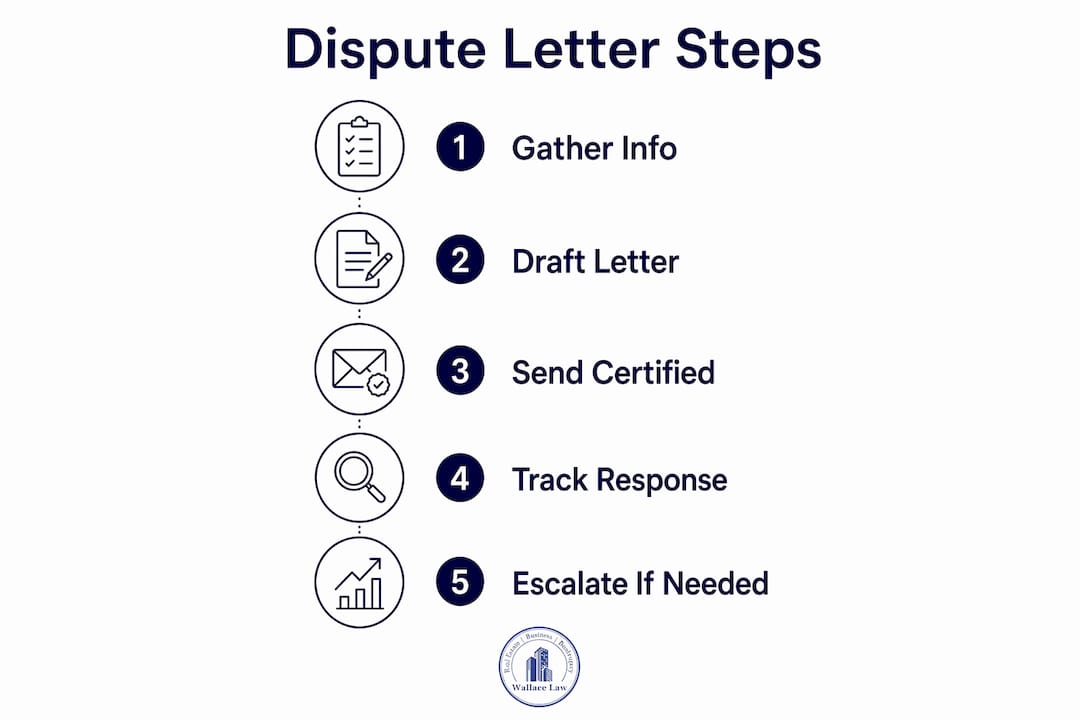
Gather these items before you write a single sentence:
- Your full loan account number and the name of your servicer
- The servicer’s designated dispute address (not the payment address, which is different)
- Monthly mortgage statements showing the error, such as a misapplied payment or incorrect escrow calculation
- Canceled checks or bank records proving payments you made
- Any prior written correspondence with the servicer, including letters and emails
- Notes from phone calls, including the date, time, and name of the representative you spoke with
The type of error matters too. Common disputes include payment posting errors, incorrect escrow account calculations, unauthorized fees, and improper foreclosure actions. Identifying the exact error category helps you write a sharper letter and cite the correct regulation.
Maintaining a chronological record of all communications and documents is critical if legal action becomes necessary later. Think of this record as your paper trail. Without it, you have your word against the servicer’s.
Pro Tip: Create a dedicated folder, physical or digital, for every document related to your dispute. Label each item with the date received or sent. This habit takes five minutes now and can save you weeks of scrambling later.
If your dispute involves escrow errors specifically, understanding what happens in an escrow dispute can help you frame the issue clearly before you write.
How to draft your mortgage servicer dispute letter

Federal law recognizes two distinct types of letters under Regulation X. A Notice of Error (NOE) challenges a specific mistake the servicer made. A Request for Information (RFI) asks the servicer to produce documents or explain account details. You can send both types, but keep them in separate letters to avoid confusion and ensure each triggers its own response deadline.
Core elements every letter must include
- Your full name and mailing address as they appear on the loan documents
- Your loan account number so the servicer can locate your file immediately
- A clear, specific description of the error or the information you are requesting, with dates and dollar amounts where applicable
- Reference to the applicable regulation: state that your letter constitutes a formal notice under 12 C.F.R. § 1024.35 (for errors) or § 1024.36 (for information requests)
- A list of attached supporting documents, such as statements, payment records, or prior correspondence
- Your requested resolution, stated plainly: correction of the error, a written explanation, or production of specific records
Referencing the regulation by number is not just legal formality. It signals to the servicer’s compliance department that you know your rights, and it routes your letter away from general customer service queues where letters often stall.
Sending your letter correctly
Send dispute letters to the servicer’s designated address for Notices of Error or Requests for Information. Sending to the payment address may not trigger legal protections at all. This is one of the most common and costly mistakes homeowners make.
Certified mail with return receipt provides the best admissible proof of delivery date, which starts the legal response clock. Keep the green return receipt card and staple it to a copy of your letter.
Pro Tip: Call your servicer’s customer service line and ask specifically for the “designated address for Notices of Error and Requests for Information.” Get the address in writing if possible. Many servicers list it on their website under a compliance or legal notices section.
Quick reference: NOE vs. RFI
| Letter type | Purpose | Regulation |
|---|---|---|
| Notice of Error (NOE) | Dispute a specific servicer mistake | 12 C.F.R. § 1024.35 |
| Request for Information (RFI) | Request documents or account details | 12 C.F.R. § 1024.36 |
| Both | Can be sent together but in separate letters | Regulation X |
The term “Qualified Written Request” appears in older guidance and is still used informally. However, describing your letter clearly as a formal notice under Regulation X produces more reliable routing to the compliance team. Use that language explicitly in your opening paragraph.
What happens after you send the letter?
Federal law sets firm deadlines once your servicer receives your dispute letter. Servicers must acknowledge receipt within 5 business days and provide a substantive response within 30 business days. That 30-day window can extend by 15 additional days in limited circumstances, but the servicer must notify you of the extension before the original deadline passes.
Possible outcomes include:
- Error confirmed and corrected: The servicer fixes the mistake and sends written confirmation
- Error disputed: The servicer explains in writing why it believes no error occurred, with supporting evidence
- Information produced: For RFI letters, the servicer provides the requested documents or a written explanation of why it cannot
“Federal law does not automatically stop foreclosure proceedings except under specific dual-tracking protections triggered by dispute letters sent timely. Dispute letters generally do not halt foreclosure unless sent more than 7 days before a scheduled sale and alleging dual-tracking violations.”
This distinction matters enormously. If your home is at risk of foreclosure, a dispute letter alone is rarely enough protection. Review your foreclosure defense options in parallel, not as a substitute for the dispute process.
If the servicer does not respond within the required window, do not wait. Document the missed deadline and prepare to escalate. A servicer’s silence is itself a violation of federal law.
What should you do if the servicer ignores your letter?
Escalation follows a specific sequence, and skipping steps can weaken your legal position. File formal notice letters directly to the servicer’s compliance address before escalating to agencies. This satisfies the legal prerequisite for further enforcement and shows regulators you followed the correct process.
Escalation options and what each one does
| Escalation path | What it does | Best used when |
|---|---|---|
| CFPB complaint | Forwards complaint to servicer for response within ~15 days | Servicer ignores or delays response |
| State banking regulator | Applies local enforcement tools | Servicer has pattern of violations |
| State attorney general | Investigates consumer protection violations | Widespread or egregious conduct |
| Loan owner (Fannie Mae, Freddie Mac) | Can pressure servicer directly | Servicer is acting against investor guidelines |
| Federal lawsuit under RESPA | Seeks damages in court | All other options exhausted |
Combining federal and state complaints produces stronger enforcement because state agencies apply local rules and often have closer relationships with servicers operating in their jurisdiction.
The financial stakes are real. Borrowers may recover actual damages, statutory damages up to $2,000, and attorney fees if a servicer fails to respond or violates RESPA requirements. That $2,000 cap applies per pattern of noncompliance, not per individual error, so the total recovery in serious cases can be substantial.
Pro Tip: Before filing a CFPB complaint, send a follow-up letter to the servicer referencing the missed deadline and stating your intent to escalate. Some servicers respond immediately once they see you know the rules. This also adds another document to your paper trail.
If foreclosure is already in motion, the timeline for escalation compresses sharply. Knowing why responding to a foreclosure summons matters can help you protect your home while the dispute process plays out.
Escalating complaints to your state banking regulator or attorney general adds enforcement leverage that federal filings alone cannot provide. Use both channels simultaneously when the situation is urgent.
Key Takeaways
A mortgage servicer dispute letter, sent to the correct designated address via certified mail with proper legal citations, is the most effective tool homeowners have to enforce their rights under RESPA and Regulation X.
| Point | Details |
|---|---|
| Use the designated address | Send to the servicer’s legal correspondence address, not the payment address, to trigger federal protections. |
| Cite the regulation by number | Reference 12 C.F.R. § 1024.35 or § 1024.36 to route your letter to the compliance department. |
| Send via certified mail | Return receipt provides admissible proof of delivery and starts the legal response clock. |
| Know the deadlines | Servicers must acknowledge within 5 business days and respond within 30, with a possible 15-day extension. |
| Escalate with documentation | File CFPB and state complaints if the servicer misses deadlines, and preserve every record for potential RESPA damages. |
Why the address line on your letter matters more than the words inside it
Most homeowners spend hours crafting the perfect dispute letter and then mail it to the wrong address. I have seen this happen repeatedly. The letter goes to the general payment processing center, gets logged as a customer service inquiry, and the federal clock never starts. Weeks pass. The servicer sends a form response. The homeowner thinks the process failed when the process never actually began.
The single most important step in this entire process is confirming the servicer’s designated legal correspondence address before you write anything else. Call, check the servicer’s website under legal or compliance notices, and get it in writing. Then send your letter to that address only, via certified mail.
The second mistake I see constantly is emotional language. A dispute letter is not a complaint in the ordinary sense. It is a legal notice. Keep every sentence factual, specific, and calm. State the error, cite the dates and amounts, reference the regulation, and request the correction. Nothing more. Servicers look for reasons to reclassify letters as general inquiries. Emotional or vague language gives them that opening.
Federal protections under RESPA are genuinely powerful when you use them correctly. The law gives you real remedies, real deadlines, and real financial recourse. The process works when you follow it precisely. When it doesn’t work, you have documented evidence and legal options that most homeowners never realize they have.
— Steven
Wallacelawflorida can help you fight back against servicer errors
Mortgage servicer disputes can move fast, especially when foreclosure is in the background. Wallacelawflorida provides residential property legal help for Florida homeowners dealing with servicer errors, escrow disputes, and related real estate challenges.

The attorneys at Wallacelawflorida review dispute letters, advise on escalation strategy, and provide foreclosure defense when servicer errors put your home at risk. The firm serves Boynton Beach and surrounding areas with the kind of personal attention that larger firms rarely offer. If you want experienced legal eyes on your situation before you send that letter, contact Wallacelawflorida today.
FAQ
What is a mortgage servicer dispute letter?
A mortgage servicer dispute letter is a formal written notice under RESPA and Regulation X that requires your servicer to investigate and correct errors or produce requested information within strict federal deadlines.
Where do I send my dispute letter?
Send your letter to the servicer’s designated address for Notices of Error or Requests for Information. Sending to the payment address may not trigger legal protections.
How long does the servicer have to respond?
Servicers must acknowledge your letter within 5 business days and provide a full response within 30 business days, with a possible 15-day extension in limited cases.
Can a dispute letter stop foreclosure?
A dispute letter does not automatically halt foreclosure. Dual-tracking protections apply only in specific circumstances, such as when the letter is sent more than 7 days before a scheduled sale and raises dual-tracking violations.
What damages can I recover if the servicer ignores my letter?
Under RESPA, you may recover actual damages, statutory damages up to $2,000, and attorney fees if the servicer fails to comply with its legal obligations after receiving your dispute letter.