

TL;DR:
- Debt collection laws establish federal and state protections that limit collectors’ actions and safeguard debtors’ rights. Knowing these laws, including the FDCPA, Regulation F, and state statutes like California’s SB 1286, helps individuals and businesses effectively respond and defend against debt recovery efforts. Acting promptly, documenting communications, and understanding legal rights are essential to avoiding default judgments and unauthorized collection tactics.
Debt collection laws are the federal and state rules that define what collectors can do to recover money owed and what protections debtors hold throughout that process. Understanding how debt collection laws work starts with two federal anchors: the Fair Debt Collection Practices Act (FDCPA) and Regulation F, the CFPB rule that updated FDCPA enforcement with major changes now fully in effect for 2026. Together, these laws set the floor for consumer protection in debt. State laws, including California’s SB 1286, can raise that floor even higher. Whether you owe a personal credit card balance or face a commercial dispute, knowing this legal framework is the difference between being pressured into paying and knowing exactly when to push back.
How debt collection laws work: collector obligations at first contact
The debt collection process begins with strict legal requirements the moment a collector reaches out. Debt collectors must provide a validation notice within 5 days of initial contact. That notice must include the debt amount, the creditor’s name, and a clear statement of your right to dispute. You then have 30 days to dispute the debt in writing, which legally halts collection activity while the collector verifies the claim.

Regulation F also controls how often collectors can call. The 7-in-7 call rule presumes harassment if a collector calls more than 7 times within 7 consecutive days or calls within 7 days of a prior conversation. This rule applies per debt, not per collector account. That distinction matters because some collectors manage multiple accounts for the same debtor.
Collectors are also permitted to contact you by phone, mail, email, and text, but each channel carries its own rules. Email and text require prior consent or compliance with specific opt-out procedures under Regulation F. Collectors must identify themselves using their licensed legal name and may not misrepresent who they are or the amount owed.
Key collector obligations at first contact include:
- Provide a written validation notice within 5 days
- Disclose the collector’s full legal name and the original creditor
- State your right to dispute the debt within 30 days
- Limit calls to no more than 7 per 7-day period per debt
- Obtain consent before contacting you by email or text
Pro Tip: Keep a call log with dates, times, and collector names. If a collector violates the 7-in-7 rule, your log becomes direct evidence in an FDCPA claim.
What rights do debtors have during debt collection?
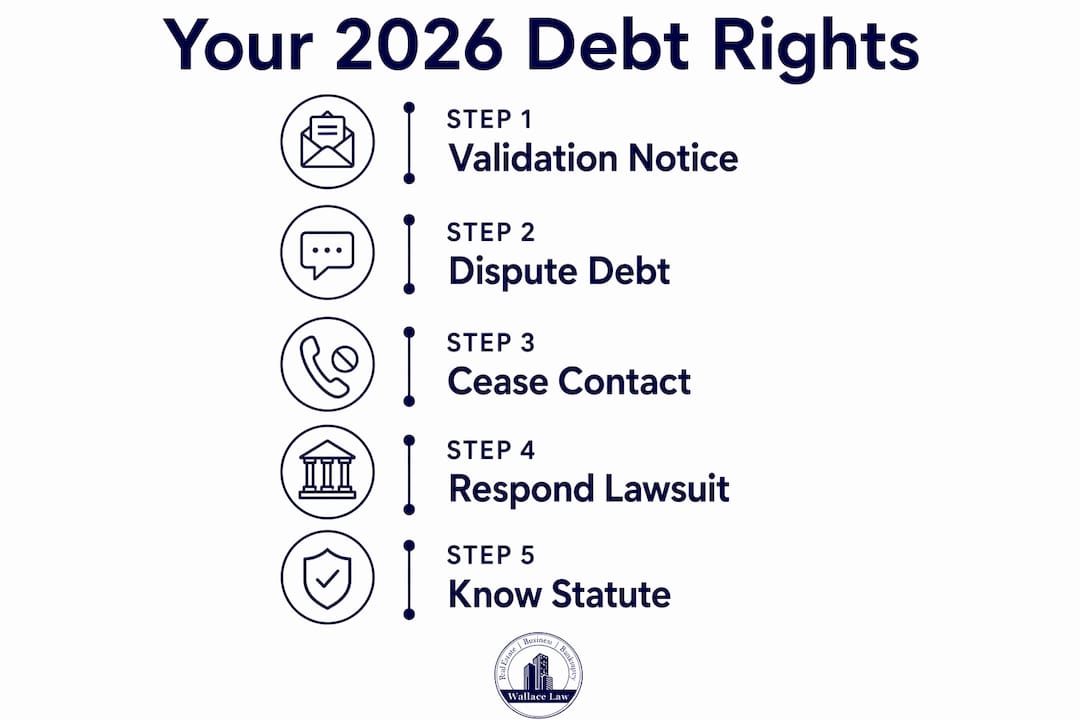
Your rights in debt collection are specific, time-sensitive, and only enforceable if you act on them correctly. The most powerful right is the 30-day dispute window. If you send a written dispute within 30 days of receiving the validation notice, the collector must stop collection activity until they verify the debt and send you proof.
The right to demand a collector stop contacting you is equally strong, but it works differently than most people expect. A cease and desist letter stops future collection calls and letters. It does not erase the debt. The collector can still file a lawsuit to recover what is owed. Understanding that distinction prevents a false sense of security.
Here is how to exercise your rights step by step:
- Request debt validation in writing within 30 days of the first contact notice.
- Send a cease and desist letter by certified mail if you want all communication to stop.
- Document every contact including dates, channel used, and what was said.
- Assert the statute of limitations in court if the debt is old. Courts do not do this automatically.
- File an FDCPA complaint with the Consumer Financial Protection Bureau (CFPB) or the Federal Trade Commission (FTC) if a collector violates the law.
- Sue the collector within one year of the violation. Statutory damages are capped at $1,000 per case, plus attorney fees and actual damages.
One risk that catches many debtors off guard: making a partial payment on an old debt can legally restart the statute of limitations. That gives the creditor a fresh window to sue, even on a debt you believed was time-barred. Never pay or acknowledge an old debt without first consulting an attorney.
Pro Tip: Always send dispute letters and cease contact requests by USPS certified mail with return receipt. Verbal requests carry no legal weight under the FDCPA. Written proof is the only proof that counts.
How do debt collection lawsuits work in court?
A debt collection lawsuit begins when a creditor or debt buyer files a complaint in civil court and serves you with a summons. You typically have 20–30 days to respond, depending on your state. Ignoring a debt collection lawsuit is the single most damaging mistake a debtor can make. Courts issue default judgments against defendants who do not respond, regardless of whether the debt is valid or even time-barred.
A default judgment gives the creditor legal tools to collect by force. Those tools include wage garnishment, bank account levies, and liens on property. Florida, for example, limits wage garnishment for heads of household, but that protection only applies if you respond and claim it.
Key facts about debt collection lawsuits:
- Respond to every summons. File a written answer with the court before the deadline.
- Assert affirmative defenses. The statute of limitations is a defense, but you must raise it in court yourself. Judges do not dismiss old debt cases automatically.
- Request debt documentation. Ask the plaintiff to prove they own the debt and that the amount is accurate.
- Hire an attorney. Debt collection defense is a specialized area. An attorney can identify procedural errors that invalidate the claim entirely.
| Lawsuit Stage | What You Should Do |
|---|---|
| Summons received | File a written answer before the deadline |
| Discovery phase | Request proof of debt ownership and amount |
| Trial or hearing | Present affirmative defenses including statute of limitations |
| Judgment issued | Appeal or negotiate a settlement immediately |
| Post-judgment | Protect exempt assets; consult an attorney on garnishment limits |
Commercial debts follow a similar process but with fewer automatic protections. Business-to-business disputes often move faster through court and carry higher judgment amounts.
Federal vs. state debt collection laws: key differences in 2026
The FDCPA is the primary federal law governing debt collection regulations, but it has a critical limitation: it applies only to consumer debts. Business debts are excluded from FDCPA coverage at the federal level. That gap is exactly where state laws step in.
California’s SB 1286 is the most significant state-level expansion in recent years. California law extends consumer-style protections to commercial debts under $500,000. That means California businesses have rights against abusive collectors that businesses in most other states simply do not have. Florida businesses, for example, must rely on contract law and general fraud statutes when facing aggressive commercial collectors.
Understanding the debt recovery legal framework means knowing which law applies to your specific situation.
| Law | Applies To | Key Protections |
|---|---|---|
| FDCPA (Federal) | Consumer debts only | Validation notices, call limits, harassment ban, $1,000 damages cap |
| Regulation F (Federal) | Consumer debts only | 7-in-7 call rule, email/text consent, model validation notices |
| California SB 1286 | Commercial debts under $500,000 | Extends FDCPA-style protections to business debtors |
| Florida State Law | Consumer and some commercial | Adds state-level penalties; no SB 1286 equivalent |
State laws can never offer less protection than the FDCPA. They can only add more. If you live in a state with stronger rules, those rules apply on top of federal law. Knowing which state’s law governs your debt, especially in multi-state transactions, is a question worth asking an attorney before you respond to any collector.
Pro Tip: If you are a Florida business owner facing aggressive collection on a commercial debt, explore whether the debt involves any California-based parties. California’s SB 1286 may apply, giving you protections Florida law does not provide. Wallacelawflorida can help you assess which laws apply to your specific situation. You can also review Chapter 7 vs. debt relief options to understand whether a broader financial strategy makes sense.
Key takeaways
Debt collection laws give debtors specific, enforceable rights, but those rights only protect you if you act in writing, respond to lawsuits, and understand which federal or state law applies to your debt.
| Point | Details |
|---|---|
| Validation notice deadline | Collectors must send debt details and dispute rights within 5 days of first contact. |
| 30-day dispute window | Send a written dispute within 30 days to legally halt collection activity. |
| Respond to every lawsuit | Ignoring a summons results in a default judgment, even on time-barred or invalid debts. |
| Written requests only | Verbal cease contact or dispute requests have no legal force under the FDCPA. |
| State laws can expand rights | California SB 1286 covers commercial debts; Florida businesses should verify which laws apply. |
What i have learned after years of debt collection cases
The pattern I see most often is this: someone receives a collection notice, feels overwhelmed, and does nothing. That silence is the most expensive decision they make. Courts do not care whether a debt is old, disputed, or even legally questionable. If you do not show up and respond, the creditor wins by default.
The second most common mistake is treating a cease and desist letter as a solution. It stops the phone calls. It does not stop a lawsuit. I have seen clients send cease letters, feel relieved, and then get blindsided by a summons two months later. The debt does not disappear because the calls do.
The statute of limitations defense is real and powerful, but it is also fragile. One partial payment, one written acknowledgment, and the clock resets. I have watched clients inadvertently give creditors a fresh four-year window to sue by sending a $50 payment on a debt that was six years old. Before you pay anything on an old account, get legal advice first.
What actually works is documentation, written communication, and timely legal response. Keep every letter. Send every dispute by certified mail. Respond to every summons. Know whether your state offers protections beyond the FDCPA. And if you are a business owner, do not assume the FDCPA protects you. It likely does not. You need to know your state’s rules and your contract rights.
The bankruptcy process is sometimes the right answer when collection pressure becomes unmanageable. But even before that point, knowing your rights reduces the leverage collectors hold over you. That knowledge alone changes the dynamic of every conversation.
— Steven
How Wallacelawflorida can help you fight back
Facing debt collectors is stressful, but you do not have to face it without legal support. Wallacelawflorida provides focused legal guidance for individuals and businesses dealing with debt collection pressure, creditor lawsuits, and financial recovery in Boynton Beach and across South Florida.
Whether you need help disputing a debt, responding to a lawsuit, or exploring whether bankruptcy protection is the right path forward, Wallacelawflorida offers the personalized attention that larger firms cannot match. The attorneys at Wallacelawflorida understand Florida’s specific rules and how federal law intersects with your situation. If collectors are calling, a summons has arrived, or you simply need to understand your options, contact Wallacelawflorida today for a consultation that puts your rights first.
FAQ
What is the FDCPA and who does it protect?
The Fair Debt Collection Practices Act is the primary federal law regulating third-party debt collectors. It applies to consumer debts only, including credit cards, medical bills, and personal loans, but not business-to-business debts.
How long do i have to dispute a debt?
You have 30 days from receiving the collector’s validation notice to dispute the debt in writing. Sending a written dispute within that window legally requires the collector to stop collection activity until they verify the debt.
Can a debt collector contact me after i send a cease letter?
A collector must stop contacting you after receiving a written cease and desist request. However, they may still file a lawsuit to recover the debt, so a cease letter stops calls but does not eliminate the underlying obligation.
What happens if i ignore a debt collection lawsuit?
Ignoring a lawsuit results in a default judgment against you, which gives the creditor the legal right to garnish wages or levy bank accounts. This outcome can occur even if the debt is invalid or past the statute of limitations.
Does the statute of limitations automatically dismiss old debt cases?
No. The statute of limitations is an affirmative defense that you must raise yourself in court. A judge will not dismiss an old debt case automatically. If you fail to respond or assert this defense, the creditor wins regardless of how old the debt is.